German Growth Forecast Slashed to 0.5% as Iran Conflict Escalates
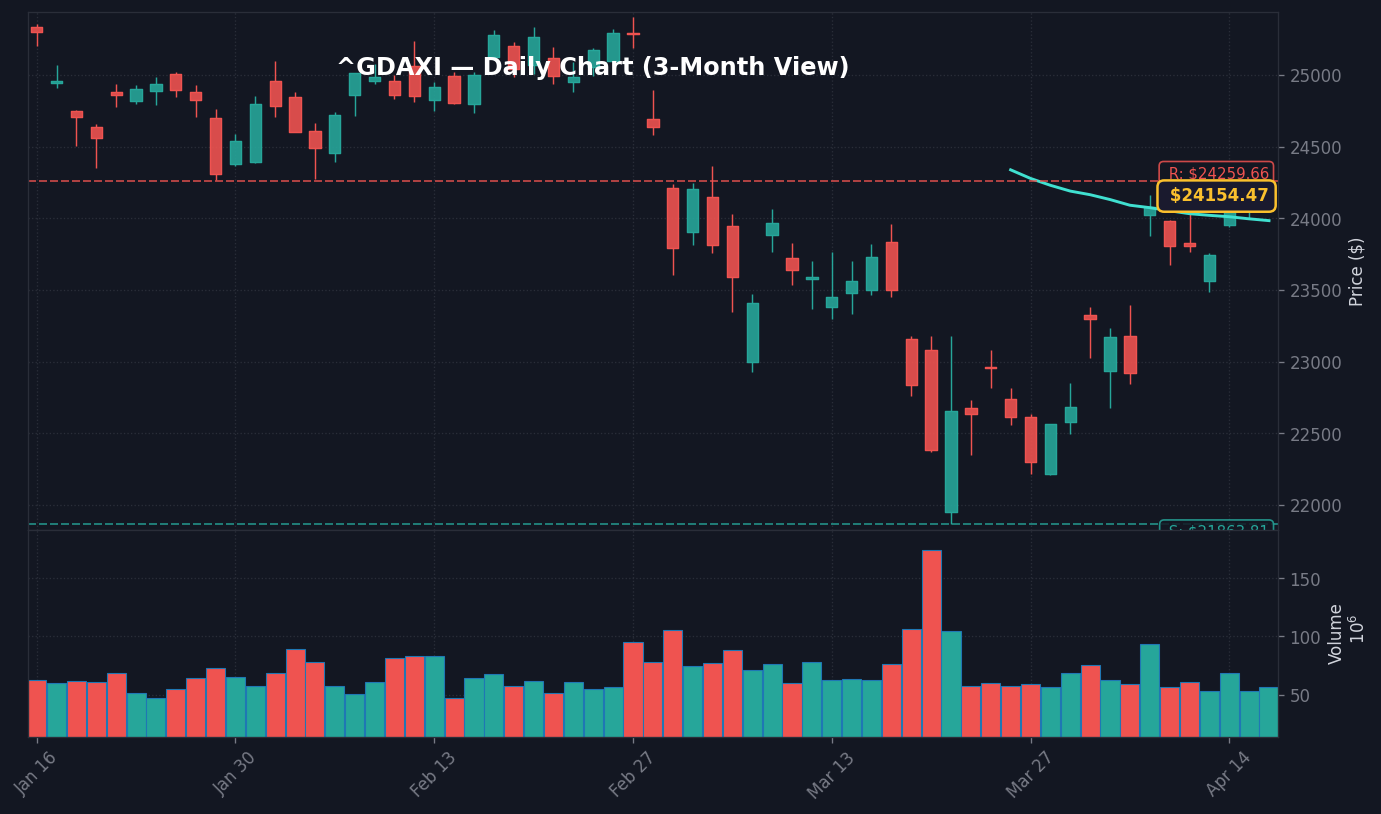
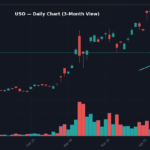
DAX Daily Chart — 3-Month View with SMA50/200
The German government has officially halved its 2026 economic growth forecast to 0.5% from a previous estimate of 1.0%, according to an exclusive report by Reuters on April 16, 2026. This downward revision is driven by the intensifying regional conflict involving Iran, which has significantly disrupted energy supply chains and increased geopolitical risk premiums across the Eurozone. What stands out here is the speed of this adjustment, suggesting that policymakers are pricing in a prolonged period of regional instability rather than a transient shock, per source reports on the state cabinet’s updated projections.
The real story lies in the transmission mechanism of this growth contraction to broader global markets. Germany remains the industrial engine of the European Union, and a 0.5% growth figure acts as a catalyst for reduced demand for US industrial exports and capital goods. According to FactSet data, German-US trade volume exceeded $200B in the previous fiscal year; therefore, a sustained slowdown in Berlin creates a tangible drag on the earnings per share (EPS) outlook for S&P 500 multinationals with high European revenue exposure. This breaking news highlights the fragility of global supply chains that have already been contending with a 3.3% CPI inflation rate as of March 2026, according to Bureau of Labor Statistics data.
The disconnect is currently between the equity market’s resilient performance and the worsening macroeconomic fundamentals surfacing in the overnight wire. While the S&P 500 closed the session prior at a level reflective of 15% earnings growth, this downward revision forces a recalibration of those expectations. The market is now forced to contend with a scenario where central banks, including the ECB and potentially the Federal Reserve, must navigate a stagflationary impulse triggered by energy price volatility. Per FRED data, the 10Y-2Y Treasury spread of 0.53pp indicates that the market remains in a restrictive yield curve environment, but the German news suggests the ‘soft landing’ narrative is facing its most significant test of the current calendar year.
Macroeconomic Read-Throughs: Treasury Yields and the Dollar Index
StockRadar · DAX Live Coverage
The immediate reaction in currency and bond markets has been swift, as market participants rush to hedge against the heightened geopolitical risk. The US Dollar Index (DXY) is currently trading at 118.86, representing a significant safe-haven bid that has gathered momentum since the Reuters report hit the wires. Per market data, this move in the DXY is a direct result of capital flight from the Eurozone toward the relative safety of the US dollar. As a result, domestic manufacturers may face increased headwind from a stronger dollar, which typically trims 2-3% from the overseas earnings of S&P 500 companies, according to consensus analyst estimates compiled by Finnhub.
The 10-year Treasury yield, currently at 4.29%, is undergoing a critical test as traders reassess the trajectory of global growth. If the German slowdown signals a wider contagion into the European debt market, we expect a flight to quality that could drive the 10Y yield toward the 4.15% support level. Conversely, if inflationary pressures from the Iran-related energy crisis persist, the 10Y could challenge the 4.45% resistance level. This shift in the yield environment is fundamentally linked to the current Fed Funds rate of 3.64%, which suggests the Federal Reserve has limited room for error if growth begins to stutter globally, according to the latest FOMC meeting minutes.
Bull Case vs Bear Case for US Equity Markets
In the bull case, market participants may view the 0.5% growth figure for Germany as a ‘priced-in’ event that provides a floor for industrial expectations. If the S&P 500 holds the 5,050 support level, it would suggest that investors are focusing more on domestic resilience than on international headwinds. This scenario assumes that US tech and financial sectors continue to show 10%+ year-over-year earnings growth, providing sufficient offset to the sluggishness seen in European manufacturing. Per historical volatility data, a bounce from these levels often signals a consolidation phase that precedes an attempt at previous all-time highs.
The bear case, however, remains grounded in the risk of supply chain contagion. If the German revision triggers a broader downward adjustment in the Eurozone growth outlook toward 0.2%, the S&P 500 could face a sharp rejection at the 5,200 level. This would likely be driven by a flight from risk-on assets, causing the VIX—currently at 18.2—to surge above the 24.1 historical average. If 4,950 support fails on the S&P 500, we expect a move toward the 4,800 level as institutional portfolio rebalancing accelerates, according to options market positioning data.
What to Watch Next
Watch whether the S&P 500 maintains the 5,050 support level during the next opening session.
Key level: 119.50 on the Dollar Index (DXY), which would signal an intensification of safe-haven flows.
If the 10Y Treasury yield breaks 4.45%, then expect a repricing of risk across growth-heavy sectors like technology.
Trigger: Upcoming European industrial production data scheduled for release on April 20, 2026.
Disclaimer: This report is for informational purposes only and does not constitute financial advice. All market data is based on information available as of 09:23 PM ET on April 16, 2026. Investment involves risk of loss.
Frequently Asked Questions
Why is the market moving right now?
Markets are reacting to the German government’s decision to halve its 2026 growth forecast to 0.5% due to regional instability. This news has triggered a flight to the US dollar and increased pressure on Treasury yields as investors recalibrate global growth expectations.
What should investors watch next?
Investors should monitor the S&P 500’s ability to hold the 5,050 support level and watch for any breaches of the 10Y Treasury yield at 4.45%. These levels will provide early indicators of whether the market is discounting this macro news or preparing for a deeper consolidation.
How does the German growth cut affect US stocks?
Germany acts as the industrial hub of Europe, and lower growth suggests reduced demand for US multinational exports. Per trade data, this can lower projected EPS for US companies with significant European exposure, potentially leading to increased volatility in industrials and tech.
This market commentary is for informational use only. The views expressed are those of the author and do not constitute financial, investment, or trading advice.
📊 Data Sources
yfinance · FRED (St. Louis Fed) · SEC EDGAR · Finnhub · World Bank · Wikidata
Last Updated: 2026-04-17 10:24 KST
This analysis uses public data sources. Investment decisions are your own responsibility.
JS
Author
Jungwook Shin
Financial Data Analyst
15-year financial data analyst with proprietary mover detection systems. Real-time catalyst analysis across US, Korea, and Japan markets.
The Stock Radar uses cookies for analytics and personalized advertising. By continuing to use our site, you accept the use of these cookies. See our Cookie Policy and Privacy Policy.