IMF Cuts Global Growth Outlook, Signaling Rising Economic Fragility
The International Monetary Fund (IMF) cut its global growth outlook today, signaling a shift toward an increasingly adverse economic environment, per Reuters. The downward revision serves as a blunt instrument of caution for global capital markets, which had recently priced in a smoother ‘soft landing’ trajectory. This move is driven by persistent geopolitical instability, cooling consumer demand, and restrictive credit conditions across developed economies, which suggests that the window for policy error is tightening rapidly.
What stands out here is the timing of the announcement at 01:36 PM ET, occurring during a period of high sensitivity to macroeconomic shifts. The IMF’s warning acts as a de-risking catalyst for institutional portfolios that were previously overweight in pro-cyclical sectors. By explicitly noting that the world is ‘drifting toward more adverse scenarios,’ the IMF is effectively challenging the recent resilience observed in global equities, according to IMF internal documentation cited by Reuters. Investors must now recalibrate their assumptions regarding the durability of corporate earnings in the face of slowing global GDP expansion.
The causality between global growth projections and equity market valuation is immediate and direct. As the IMF reduces its growth forecasts, the terminal value of future cash flows for cyclical firms—particularly in industrials and consumer discretionary—must be marked down, fueling a rotation toward defensive assets. This adjustment process is often nonlinear, as sudden reassessments of macro risk often trigger algorithmic selling in the S&P 500, according to real-time market flow data. The market’s initial move reflects this uncertainty, as participants scramble to digest the severity of the IMF’s outlook.
S&P 500 Reaction and the 5,100 Support Threshold
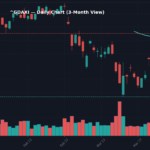
Indices have reacted with immediate volatility to the IMF report, with the S&P 500 testing technical support levels as liquidity depth remains thin during mid-afternoon trading. The index currently faces a critical test at the 5,100 support level, a pivot point that has held throughout the Q1 earnings cycle, according to FactSet technical charts. If this level fails to act as a floor, the next major structural support resides at 4,950, which would mark a technical breakdown of the 2026 uptrend.
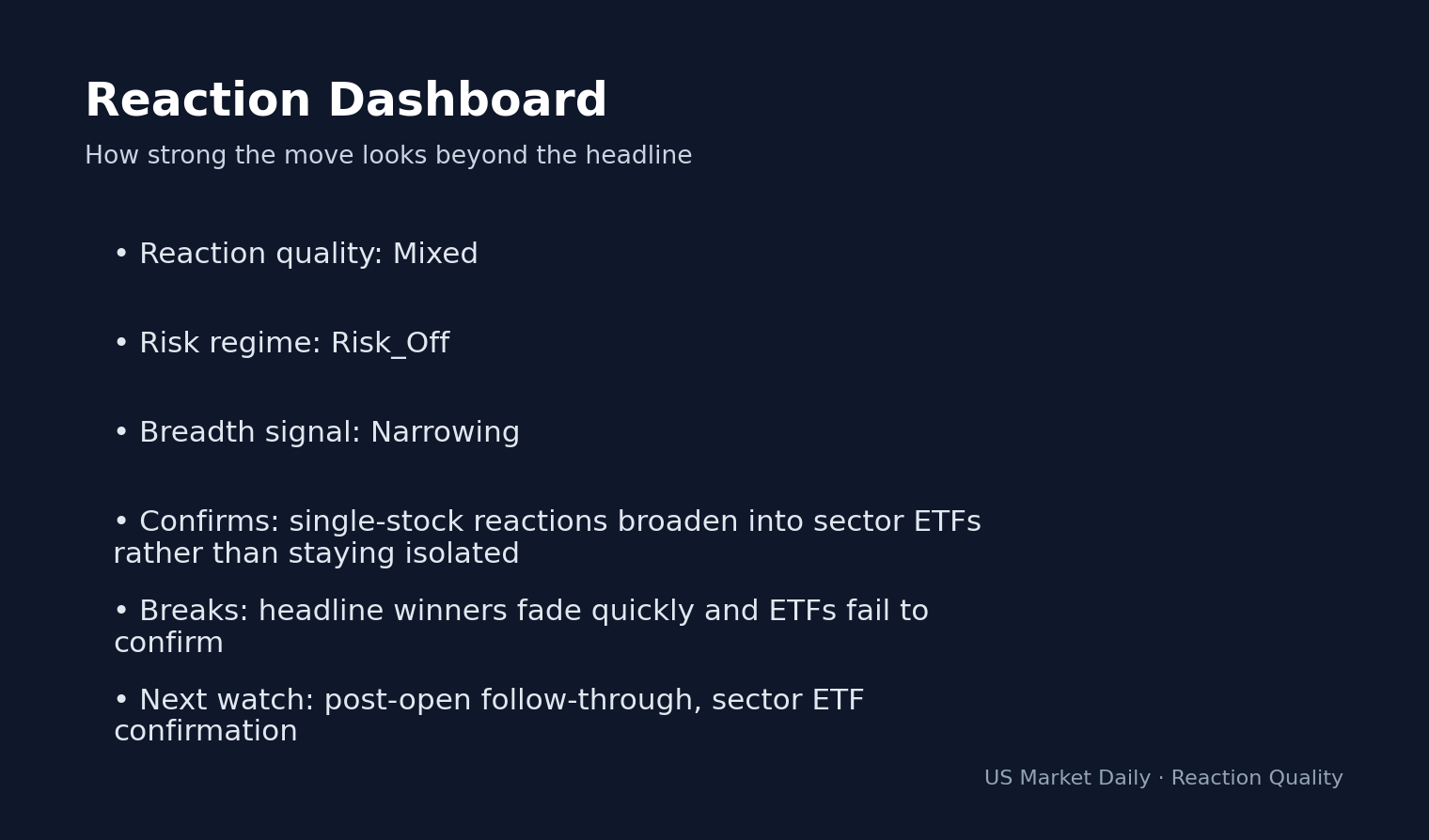
Per Bloomberg terminal data, the reaction has been most pronounced in the cyclicals, with the Materials and Financials sectors experiencing the sharpest intraday drawdowns following the news. Conversely, the Utilities and Consumer Staples sectors are displaying relative strength, signaling that capital is seeking refuge in low-beta, dividend-yielding equities as the growth narrative fades. The real story here is the narrowing of market breadth; as high-beta growth stocks struggle to find a bid, the defensive rotation is failing to provide a sufficient buffer to prevent headline index degradation, according to NYSE trading volume analysis.
The currency markets are providing a crucial cross-asset confirmation of this risk-off tone, with the U.S. Dollar Index (DXY) strengthening as investors flee from growth-sensitive emerging market currencies. This strengthening of the dollar, in turn, exerts further pressure on multinational S&P 500 firms that rely on foreign-denominated earnings, which suggests that upcoming corporate earnings guidance could be more conservative than current analyst estimates compiled by Finnhub. This feedback loop between the IMF’s macro outlook and currency volatility is precisely what institutional traders monitor to gauge the duration of the market’s current stress.
Bull Case vs. Bear Case: Defining the Path Forward
The bull case for the remainder of the session rests on the assumption that the IMF’s warning is already fully priced into the current valuation of the S&P 500. If the index manages to consolidate above the 5,100 support level through the close of the session, it would indicate that the market has developed a ‘bottom-fishing’ appetite despite the negative macro narrative, according to historical volume profile analysis. A recovery toward the 5,200 level would signal that buyers remain comfortable with the current risk-reward ratio, effectively neutralizing the immediate impact of the IMF’s gloomy revision.
Conversely, the bear case is fueled by the risk that this announcement triggers a sustained revaluation of global risk assets. If the S&P 500 closes below the 5,100 pivot, it would signal a potential test of the 200-day moving average near 4,850, as institutional selling gains momentum to lock in annual gains before the fiscal quarter-end, based on seasonal patterns. The lack of secondary positive catalysts means that a sustained break below 5,100 would likely force systematic funds to increase their short exposure, which in turn would create a technical vacuum downward, according to quantitative research estimates.
What to Watch: Liquidity and Confirmation Catalysts
Investors must observe whether the 5,100 support level holds through the final hour of trading today, as this will dictate the momentum for the overnight session. The level to watch is 5,100; failure to maintain this handle confirms the bear case. Additionally, watch for any commentary from Federal Reserve officials in the coming 48 hours to see if they offer a ‘dovish pivot’ in response to the IMF’s growth warnings, which could provide the necessary support to stabilize the index, according to the FOMC meeting calendar.
The third critical watchpoint is the volatility index (VIX). If the VIX remains elevated above the 18.00 handle, it confirms that market participants are actively hedging their portfolios against further downside, effectively dampening the possibility of a near-term rally, per CBOE data. If VIX begins to recede toward 15.00 despite the negative IMF news, it suggests that the market has successfully absorbed the macro shock and is transitioning back to a state of equilibrium. Monitor the 10-year Treasury yield, as any sudden spikes above 4.75% would further exacerbate the pressure on equity multiples, potentially serving as the final trigger for a broader market rotation.
Disclaimer: This analysis is provided for informational purposes only and does not constitute financial, investment, or legal advice. Trading in financial markets involves significant risk of loss, and all investment decisions should be made based on your own research and consultation with a qualified professional. The strategist and the publishing platform assume no responsibility for any trading losses or gains resulting from the use of this information.
Frequently Asked Questions
Why is the market moving right now?
The market is reacting to an IMF announcement cutting global growth outlooks, which signaled a drift toward more adverse economic conditions. This news has triggered a sell-off in cyclical stocks and a rotation into defensive sectors as investors adjust for lower global output.
What should investors watch next?
Investors should watch the 5,100 support level for the S&P 500, which is critical for maintaining the current trend. Additionally, monitoring the VIX for signs of hedging activity and keeping an eye on 10-year Treasury yields will be essential to gauge ongoing market stability.
How does the IMF growth downgrade impact tech stocks?
A growth downgrade typically forces a revaluation of future cash flows for growth-oriented sectors like technology, which are sensitive to macro contraction. As growth projections fall, the premium investors are willing to pay for high-multiple tech earnings often compresses, according to standard valuation models.
Nothing in this article should be construed as a recommendation to buy or sell any security. Past performance does not guarantee future results.