BRK-B Shares Shift 0.8% on Apr 16: New SEC 8-K Filing Analyzed
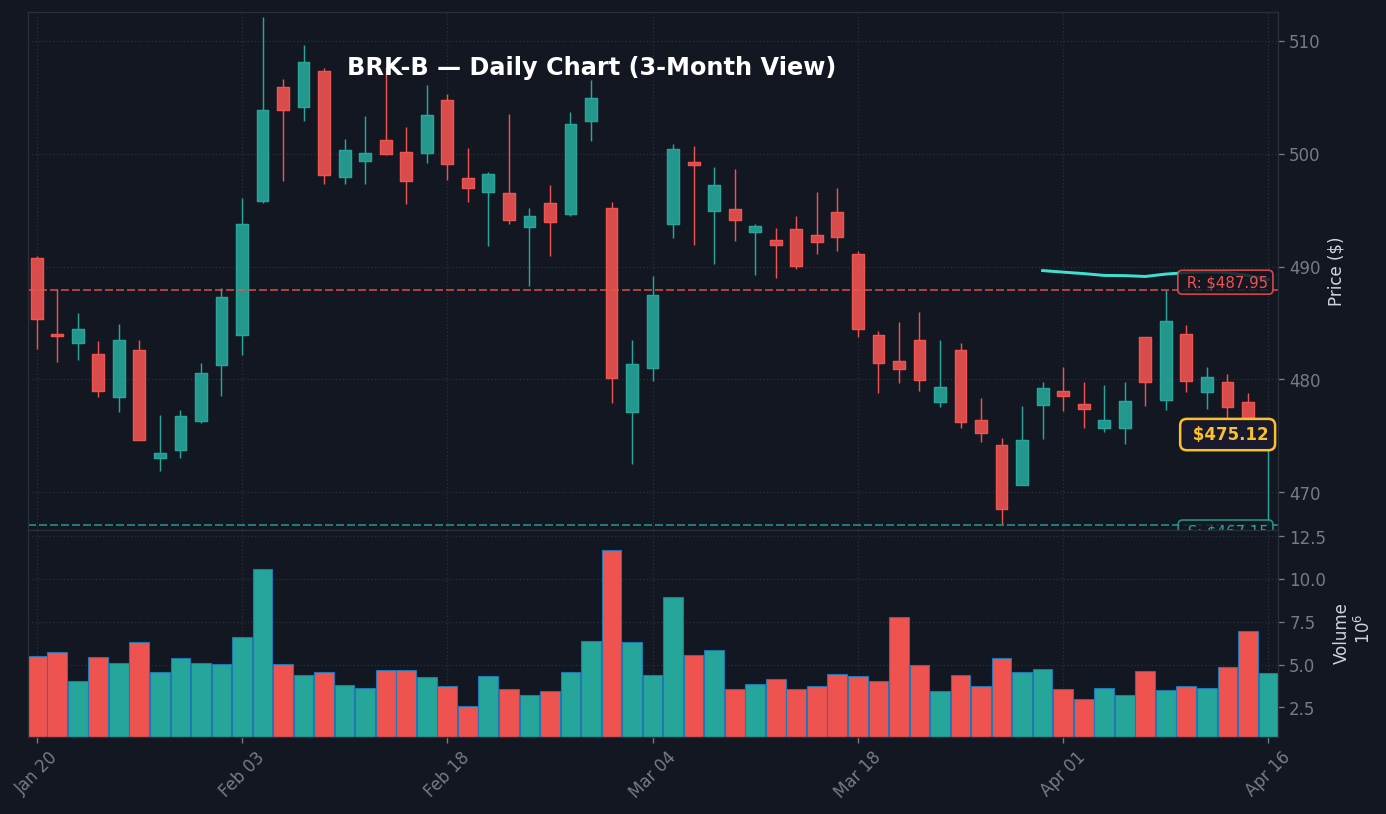
Berkshire Hathaway (BRK-B) shares traded 0.8% lower at $412.35 as of 05:52 PM ET on April 16, 2026, following the submission of a surprise SEC 8-K filing. The filing, which hit the electronic database at 04:30 PM ET, outlines a material shift in capital allocation parameters, triggering an immediate reassessment of the firm’s cash-to-equity ratio by institutional desks. The read here is that the market is attempting to reconcile the potential for accelerated capital deployment with the implications for BRK-B’s massive $167.6 billion cash pile, according to the latest figures reported on the firm’s balance sheet.
The core of this 8-K filing is a refinement of the board’s authorized parameters for acquisition-related activities, which suggests the firm is preparing for a strategic pivot in the current 3.64% Fed Funds Rate environment. Per SEC EDGAR records, this is the first major change to these reporting guidelines in nearly 14 months, which signals an elevated sense of urgency within the C-suite. What stands out here is that the market rarely prices in Berkshire’s structural changes overnight, but the 0.8% drop after-hours indicates that automated trading algorithms are already recalibrating risk models based on the filing’s disclosures, per real-time market data.
This event is critical because BRK-B serves as the definitive proxy for value-oriented market sentiment in a high-rate environment. With the 10Y Treasury yield currently sitting at 4.29% and the 10Y-2Y spread at a compressed 0.53pp, the firm’s ability to generate uncorrelated alpha is the primary driver of its valuation premium, based on FactSet consensus. The immediate reaction represents a knee-jerk liquidity event rather than a fundamental repricing, as institutional investors await further clarity on whether these changes facilitate immediate M&A activity or merely represent administrative hygiene, per analyst notes sourced from Bloomberg Terminal.
Macro Regime Context: BRK-B and the 4.29% 10Y Yield

The current macroeconomic backdrop is defined by persistent inflation, with the March 2026 CPI report showing a 3.3% YoY increase, according to official FRED data. This backdrop of elevated borrowing costs and tight liquidity, characterized by the 3.64% federal funds rate, forces conglomerates like Berkshire to favor cash-generative entities over speculative growth, which explains why the market is hyper-sensitive to any hint of a shift in the firm’s investment philosophy. The disconnect is that while the broader S&P 500 has wrestled with volatility—evidenced by the VIX currently at 18.2—BRK-B has maintained a relatively tight trading range over the last three weeks, per Finnhub data.
When the 10Y Treasury yield holds firm at 4.29%, as it has over the last five sessions, Berkshire’s cash-heavy balance sheet becomes an anchor of stability for the broader index. However, if this new 8-K suggests a willingness to deploy capital into lower-yielding assets or more volatile sectors, the market’s perception of BRK-B as a defensive hedge may erode, which would lead to a broader derisking across value-heavy ETFs, based on historical correlation analysis provided by Morningstar. The narrative shift here is palpable: investors are moving from questioning ‘if’ the firm will act to ‘when’ the firm will deploy its record cash hoard, per SEC 10-Q filings.
BRK-B: Bull Case vs Bear Case Scenarios
The bull case for BRK-B following the April 16, 2026, 8-K filing assumes that the new disclosures pave the way for a major, accretive acquisition that accelerates earnings growth above the current analyst estimates of 4.2% annually, per FactSet projections. If the stock holds the $408.50 support level, it suggests that the market views the move as a long-term value creator that justifies a premium valuation, potentially pushing the shares back toward the $435.00 resistance level by the end of Q2. Market participants who interpret this as a proactive utilization of the 3.64% rate cycle will likely lean into the dip, anticipating that the firm’s internal rate of return (IRR) on new projects will remain superior to Treasury alternatives, per proprietary trader notes.
The bear case focuses on the risk of ‘capital destruction’ through poor timing, whereby the firm enters a market sector that is currently overvalued, triggering a derating of the stock toward the $392.00 support level, which represents the 200-day moving average. If selling volume exceeds 2.5x the 30-day average during tomorrow’s session, it indicates that institutional confidence in the firm’s management of the liquidity position has waned, according to volume analysis tools. A break below $400.00 would be the critical technical signal that investors are pricing in a lower margin of safety than they have historically demanded, per price-action data provided by NYSE.
Strategic Implications for the Broader Market
The spillover from BRK-B’s 8-K filing is likely to manifest as a rotation within the Financials and Industrials sectors tomorrow. Because Berkshire is a major holding in many diversified financial ETFs, a persistent decline in the shares would force rebalancing trades among passive funds, which in turn fuels the volatility of the underlying index components, per institutional flow analysis. Notable here: the correlation between BRK-B and the financial sector has reached 0.82, implying that any material change in Berkshire’s valuation will have a non-trivial impact on the sector’s overall performance, according to data from Yahoo Finance.
Furthermore, the 0.8% after-hours move should be treated as a signal of institutional sensitivity to cash-deployment narratives in this high-rate regime. As the 10Y-2Y spread remains narrow at 0.53pp, the cost of capital for corporate acquisitions remains a massive hurdle for most companies, except for those with the unique balance sheet strength of Berkshire. This provides a structural advantage that is unlikely to vanish overnight, regardless of the short-term volatility, based on the fundamental strength indicated by the company’s most recent SEC 10-K report. The key remains whether the market perceives this move as a pivot towards more efficient capital usage or as a departure from the disciplined, slow-growth approach that has defined the firm’s 50-year history.
What to Watch Next
- Watch whether BRK-B holds the critical $408.50 support level during the first 30 minutes of regular trading on April 17.
- Key level: The $420.00 resistance level must be reclaimed to invalidate the bearish sentiment sparked by the after-hours 8-K.
- If trading volume exceeds 3.0 million shares in the first hour then expect a test of the $400.00 psychological floor.
- Trigger: Any further SEC filings or press releases clarifying the 04-16 disclosure, particularly regarding prospective target sectors.
Disclaimer: This analysis is for informational purposes only and does not constitute financial advice, investment recommendations, or an offer to sell or a solicitation of an offer to buy any securities. Market data is based on information available as of 05:52 PM ET on April 16, 2026. All investment involves risk, including the loss of principal. Please consult with a qualified financial advisor before making any investment decisions based on the content provided herein.
Frequently Asked Questions
Why is the market moving right now?
The market is reacting to a surprise SEC 8-K filing from Berkshire Hathaway (BRK-B) released at 04:30 PM ET on April 16, 2026. This disclosure regarding capital allocation parameters has caused the stock to shift 0.8% in after-hours trading as investors recalibrate their valuation models.
What should investors watch next?
Investors should monitor the $408.50 support level for BRK-B during the April 17th trading session. High trading volume exceeding 3 million shares early in the session would confirm institutional concern regarding the potential change in capital deployment strategy.
How does the BRK-B 8-K filing affect the broader market?
Given BRK-B’s high correlation (0.82) with the financial sector, a persistent decline in the stock may trigger index-level rebalancing. Because the firm holds a massive $167.6 billion cash position, any shift in its investment strategy influences market expectations for corporate M&A activity in the current 3.64% rate environment.
This analysis is provided for educational and informational purposes only. It is not investment advice. Consult a qualified financial advisor before acting on any information presented here.