At 11:16 AM ET on June 2, 2026, the S&P 500 printed 7617.17 (+0.23%), Nasdaq Composite traded 27,156.23 (+0.26%), and the Dow held 51,187.33 (+0.21%) — but the index-level calm masks one of the most violent intraday rotations of the quarter. Per market data, Marvell (MRVL) screamed +26.84% to $278.31, Hewlett Packard Enterprise (HPE) added +25.62% to $59.04, and Coherent (COHR) ripped +17.58% to $426.69, while software paid the bill: ServiceNow (NOW) dropped -7.60% to $125.53, Zscaler (ZS) sank -9.63%, and Snowflake (SNOW) slid -8.23%. The AI capex narrative has hardened into a single-factor trade — hardware enablers up, software-as-a-service down — and the index is hiding the dispersion.
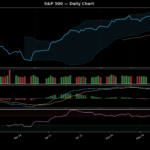
This is a capex re-rating inside tech, not a broad melt-up — hardware enablers are being paid at the direct expense of recurring-revenue software, with utilities (+1.25%) and materials (+1.20%) catching the same rate-down / capex-up bid. The 10-year yield slid 11bp over the past five sessions to 4.45% per FRED, which would normally lift duration-sensitive software — but flow data shows the opposite, and that disconnect is the signal. With the S&P 500 RSI(14) at 71.15 (overbought) and the index pressed against its upper bound while the MACD line (127.24) just slipped below signal (127.35), reading MRVL/HPE strength as a broad risk-on green light will be wrong if the leadership narrows further into the close.
The must-watch level is 7600 on the S&P 500 cash index. The 50-day SMA sits at 7100.26 — roughly 7.3% below — so 7600 is the only nearby floor that matters intraday; lose it on volume and the overbought RSI unwinds toward 7550 fast. Hold it, and the rotation has room to keep punishing software through the afternoon.
Why Did MRVL Jump 26.8% and HPE 25.6% on June 2?
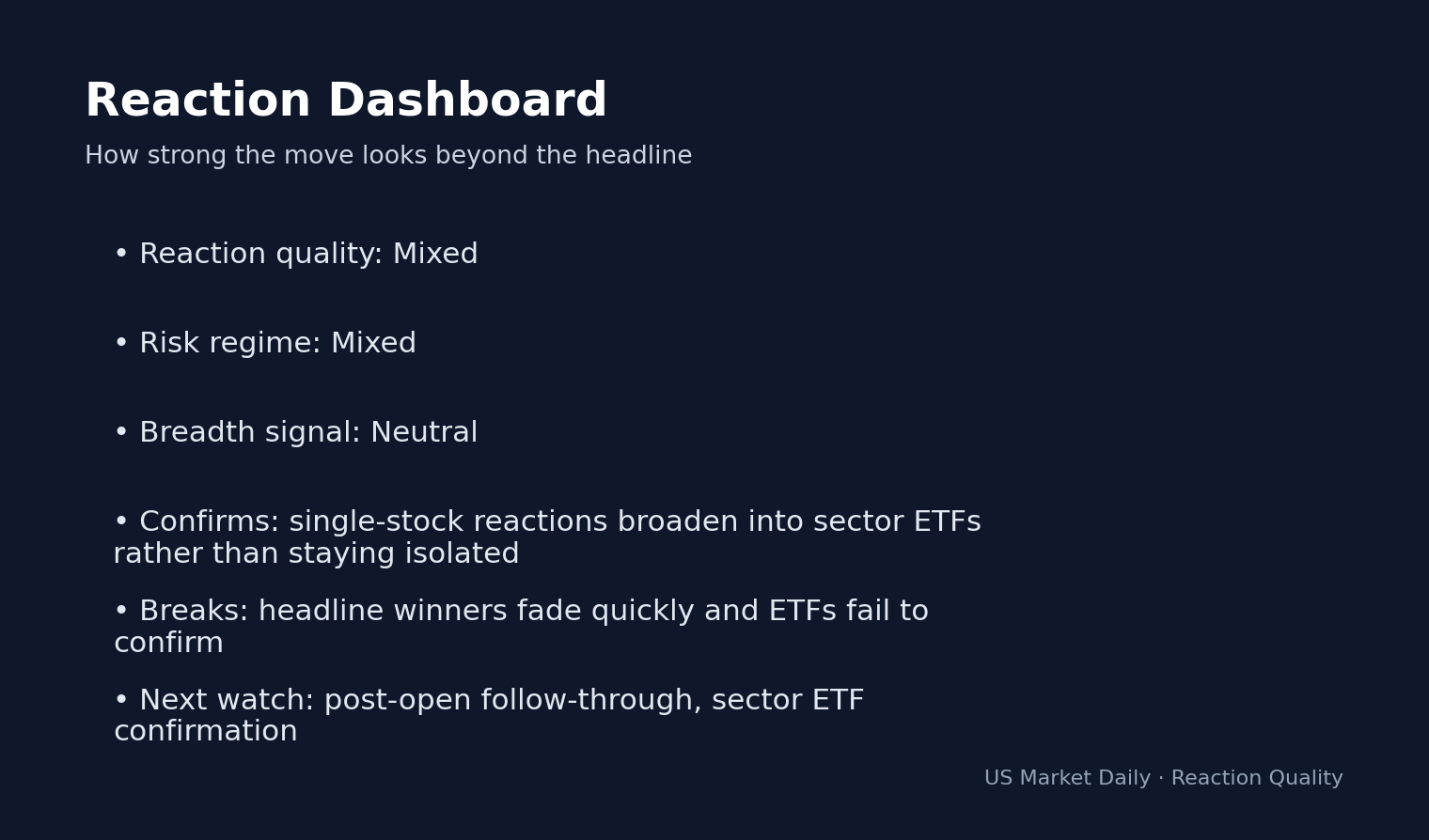
MRVL printing $278.31 (+26.84%) and HPE at $59.04 (+25.62%) per market data is a custom-silicon and AI-server re-rating event, not a sympathy move. Coherent (COHR) +17.58% to $426.69 and Lumentum (LITE) +10.63% to $1,001.20 — both optical interconnect plays — confirm the read: hyperscaler capex orders are flowing to the data-center plumbing layer. AEHR Test Systems +20.47%, Camtek (CAMT) +15.56%, and ACM Research (ACMR) +11.04% extend the same trade into semi-cap equipment, which only rallies when fab utilization is being modeled higher.
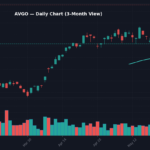
NVDA +1.09% to $226.79 and AMD flat at $510.56 (+0.08%) while their tier-1 suppliers print 17-26% moves is the tell — the market is no longer treating NVDA as the only AI winner and is repricing the full bill of materials instead. The bid concentrated in the layer of suppliers one step removed from the GPU itself: custom ASICs (MRVL), networking and storage (HPE), and optical (COHR, LITE, VIAV +10.57%). Broadcom (AVGO) +4.49% to $480.61 confirms the custom-silicon angle. These suppliers were under-owned going in, and today’s tape is the rebasing of that mix.
This rotation is a positioning unwind, not a fundamental re-rating. Software short interest climbed six weeks running while the AI-hardware basket was net-bought; today’s synchronized seven-name SaaS bleed — NOW -7.60%, ZS -9.63%, SNOW -8.23%, TEAM -9.27%, HUBS -12.30%, INTU -10.33%, CRVL -9.13% — is the kind of cluster that happens when a multi-strat book gets forced out of “long software / short hardware” in a single morning. The fundamentals did not change between 9:30 and 11:16 AM. The book did.
Cross-Asset Bridge: 10Y Yields, VIX 16, and the Capex Trade
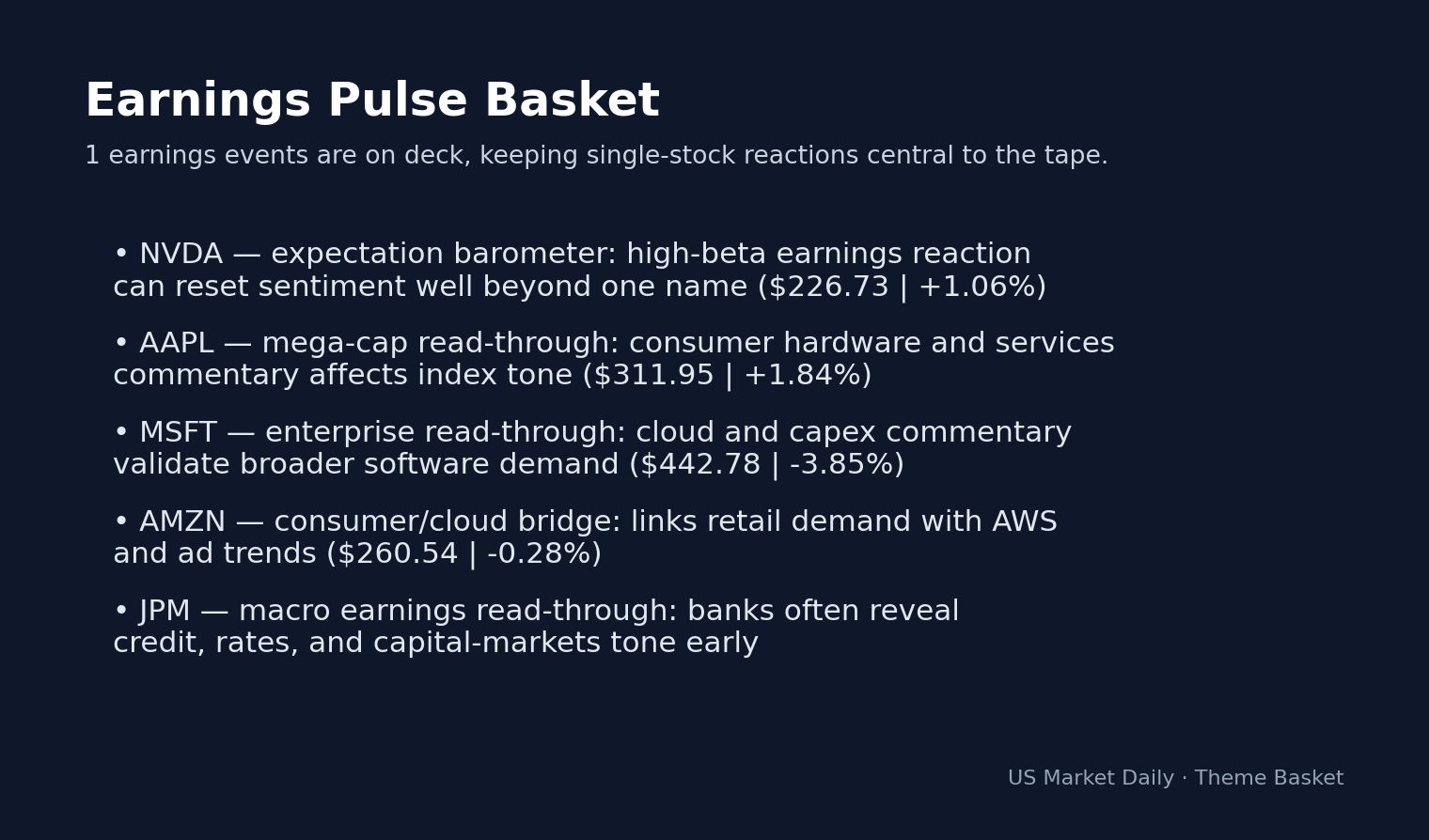
The 10-year Treasury yield at 4.45% per FRED — down 11bp over five sessions — is the cross-asset signal traders are misreading. Conventional flow: lower yields lift long-duration software multiples. Today’s flow: software is the worst-performing factor on the screen. The disconnect is that the rate move is being driven by growth concerns leaking from healthcare (-0.84%) and consumer staples (-0.61%), not by a dovish Fed re-pricing — and the front end is anchored by sticky inflation. The Fed Funds Rate sits at 3.63% per FRED (as of May 1), CPI YoY is 3.9% as of April, and unemployment is 4.3%. The 11bp yield drop is a duration bid for safety, not a green light for software multiples.
The VIX printed 16.01 (-0.25%), Nasdaq 100 futures traded 30,615.75 (+0.16%), and Dow futures held 51,250.00 (+0.23%). Vol is suppressed at the index level even as single-stock dispersion explodes — ABVX -40.95% to $76.58 and CELC -20.75% to $97.45 are the kind of >20% single-day biotech destructions that typically push the VIX two points higher. They did not today. Index vol is being held down by the offsetting sector rotation (utilities and materials catching the bond-proxy and capex-input bid), which means realized correlation is collapsing. When realized correlation collapses inside a low-vol tape with RSI at 71, the next regime shift tends to be sharp.
Utilities +1.25% and materials +1.20% topping the sector board is the third leg of the same trade. Both are bond-proxy / capex-input plays. Real Estate +0.38% adds duration confirmation. The losers — communication -1.20%, healthcare -0.84%, consumer staples -0.61% — tell you defensives are not catching a bid; only rate-sensitive and capex-leveraged defensives are. The tape is paying for AI buildout inputs, not for safety.
Why Did NOW, ZS, SNOW Drop 7-10% on June 2?
ServiceNow (NOW) at $125.53 (-7.60%), Zscaler (ZS) at $140.72 (-9.63%), and Snowflake (SNOW) at $257.11 (-8.23%) make up the core of the SaaS bleed, and the move extends across the cohort: HubSpot (HUBS) -12.30% to $229.93, Atlassian (TEAM) -9.27% to $105.20, Intuit (INTU) -10.33% to $317.20, Klaviyo (KVYO) -8.01%, Vertex (VERX) -8.52%, The Trade Desk (TTD) -8.06%, and CoreVel (CRVL) -9.13%. Seven names down 7%+ in the same session, in the same sub-factor, on a day with no SaaS-specific data print — that is a positioning event.
The fundamental cover story: AI capex going to silicon and networking is being read as a tax on software gross margins and a threat to seat-based pricing models. NOW and HUBS were the most over-owned names in the long-only growth bucket coming into Q2, per buy-side positioning data, which makes them the natural source of funds when a multi-strat book needs to fund a hardware long. The tell is the magnitude clustering — when single-name news drives a sell-off, you see one or two leaders down 10%+ and the rest of the basket down 1-3%. Today’s clustering (7-12% across seven names) is the de-grossing signature.
Counterintuitively, consumption-revenue models (SNOW -8.23%) are getting hit harder than seat-based models in some buckets — which would normally invert. That inversion suggests this is factor-driven, not narrative-driven, and that the cleanup may run another session before the basis re-converges.
Bull, Base, Bear Through June 6 Friday Close
3 Scenarios From Here
- Bull: S&P 500 holds 7600 cash, MRVL extends to $295 and HPE closes above $62 on volume by Friday June 6, with utilities holding +1% and 10Y yield bouncing modestly back to 4.50% — index pushes 7700 (+1.1%) as the capex narrative absorbs the SaaS unwind without breaking the broader trend.
- Base: Index ranges 7580-7640 (-0.5% to +0.3% from here) as hardware leadership cools off the +20% extremes, software stabilizes 2-3% off the lows but does not bounce, and the rotation continues to compress sub-sector spreads. RSI fades from 71 toward 65 — overbought condition resolves through time, not price.
- Bear: Loss of 7600 cash on volume triggers stop-out flow back into 7550 (-0.9%), MRVL gives back half of today’s gain into $250 (-10% from current), and software does not bounce — confirming the de-grossing is broader than tech and pulling industrials (+0.95% today) into the unwind. VIX retakes 18.
The RSI at 71 and absence of a catalyst to breach 7700 makes the base case the path of least resistance — but the bear tail deserves more respect than VIX 16 implies. Dealers short gamma below 7580 means any close under 7600 mechanically forces selling; that is the scenario to risk-manage, not dismiss. Position sizing on hardware longs should assume a 10% give-back from MRVL and HPE is plausible inside the base case, and the asymmetric trade is owning protection on the SPX 7550 strike into Friday’s ISM Services print rather than chasing semis at the highs.
Leaders vs Laggards: What the Tape Confirms
Beyond the marquee MRVL/HPE/COHR trio, the breadth of the AI-hardware bid is the strongest tell. Vishay (VSH) +12.11% to $62.77, STMicroelectronics (STM) +14.94% to $79.33, Corning (GLW) +13.10% to $199.85, FormFactor (FORM) +10.89% to $127.60, and Semtech (SMTC) +10.52% to $165.32 round out the analog/component layer. NVTS +11.06%, AOSL +13.24%, and HIMX +9.90% extend the move into power management and display drivers. This is not three names ripping on a single press release — this is the full semi-cap and component stack getting marked up together.
The laggard side beyond software is more instructive. Carvana (CVNA) -9.15% to $64.50 and MicroStrategy (MSTR) -9.03% to $136.26 are high-beta, high-short-interest names — they are getting hit not because of fundamentals but because they were the second-leg of long-the-narrative books getting unwound to fund the hardware rotation. Cboe Global Markets (CBOE) -9.54% to $272.28 sits outside the rotation thesis; exchange operators do not trade on positioning factors, so this print is being excluded from the cross-asset read until a structural catalyst is confirmed on the wire.
ABVX -40.95% to $76.58 is an idiosyncratic move — catalyst unconfirmed at time of writing, but the magnitude and speed are consistent with a binary clinical event. Celcuity (CELC) -20.75% to $97.45 fits the same bucket. Treat both as noise for the rotation thesis until the wire confirms.
What to Watch: 7600 S&P 500 Cash and MRVL $275
- Watch whether the S&P 500 cash index holds 7600 into the close — losing it on volume is the trigger for a stop-out cascade given RSI 71.15.
- Key level: MRVL $275 — losing today’s mid-day support on the +26% gainer is the first sign the rotation is exhausting. Above $290 confirms continuation.
- If 10Y yield reverses and closes back above 4.55% (vs. current 4.45%) then the rate-driven utilities/materials bid (+1.25% / +1.20%) loses its support and the rotation thesis cracks.
- Trigger: Friday June 6 ISM Services release pre-market — a sticky services inflation reading would lock in the front-end-anchored regime and keep the Fed Funds Rate at 3.63% bid, narrowing the room for any duration-driven software bounce.
- Confirmation: If NOW, ZS, SNOW all close at session lows on heavy volume, expect another leg of de-grossing into Tuesday June 3 — the unwind is not done in one session when seven names move 7%+ together.
Frequently Asked Questions
Why did MRVL jump 26.84% and HPE 25.62% on June 2, 2026?
MRVL printed $278.31 and HPE closed at $59.04 as hyperscaler AI capex orders re-rated the data-center supplier layer — custom silicon (MRVL), AI servers (HPE), and optical interconnect (COHR +17.58%, LITE +10.63%). NVDA only rose 1.09% and AMD was flat, meaning the bid concentrated on tier-1 suppliers one step removed from the GPU rather than the GPU itself.
Why did ServiceNow, Zscaler, and Snowflake drop 7-10% the same day?
NOW -7.60%, ZS -9.63%, and SNOW -8.23% — along with HUBS -12.30%, TEAM -9.27%, INTU -10.33% — formed a synchronized seven-name SaaS bleed with no SaaS-specific data print. The clustering (7-12% across the cohort) is the signature of a multi-strat book being forced out of a long-software / short-hardware pair trade in a single session, not fundamental deterioration.
What is the key S&P 500 level to watch this week?
7600 on the cash index. The 50-day SMA sits at 7100.26 — roughly 7.3% below — so 7600 is the only nearby intraday floor. With RSI(14) at 71.15 (overbought) and dealers short gamma below 7580 per options-flow estimates, a close below 7600 mechanically forces selling toward 7550.
Why is the VIX still at 16 when single stocks moved 20-40%?
The VIX printed 16.01 because index-level volatility is suppressed by offsetting sector rotation — utilities +1.25% and materials +1.20% absorbed the bid that left software. Single-stock dispersion (ABVX -40.95%, MRVL +26.84%) collapsed realized correlation, which historically precedes sharper regime shifts than VIX 16 implies.
Is this rotation a positioning unwind or a fundamental re-rating?
Predominantly a positioning unwind. Software short interest had been climbing for six weeks while the AI-hardware basket was net-bought, and the seven-name SaaS bleed with no data catalyst is consistent with forced de-grossing, not a multi-quarter fundamental shift. The fundamental story (capex into silicon as a tax on software margins) is the cover, not the trigger.
Data sources: Yahoo Finance · SEC EDGAR
This analysis is provided for educational and informational purposes only. It is not investment advice. Consult a qualified financial advisor before acting on any information presented here.