ORCL +5.5% on Apr 15: Oracle Named a Leader in Gartner® Magic Quadrant™ for Transportation Management Systems for the 19th Time
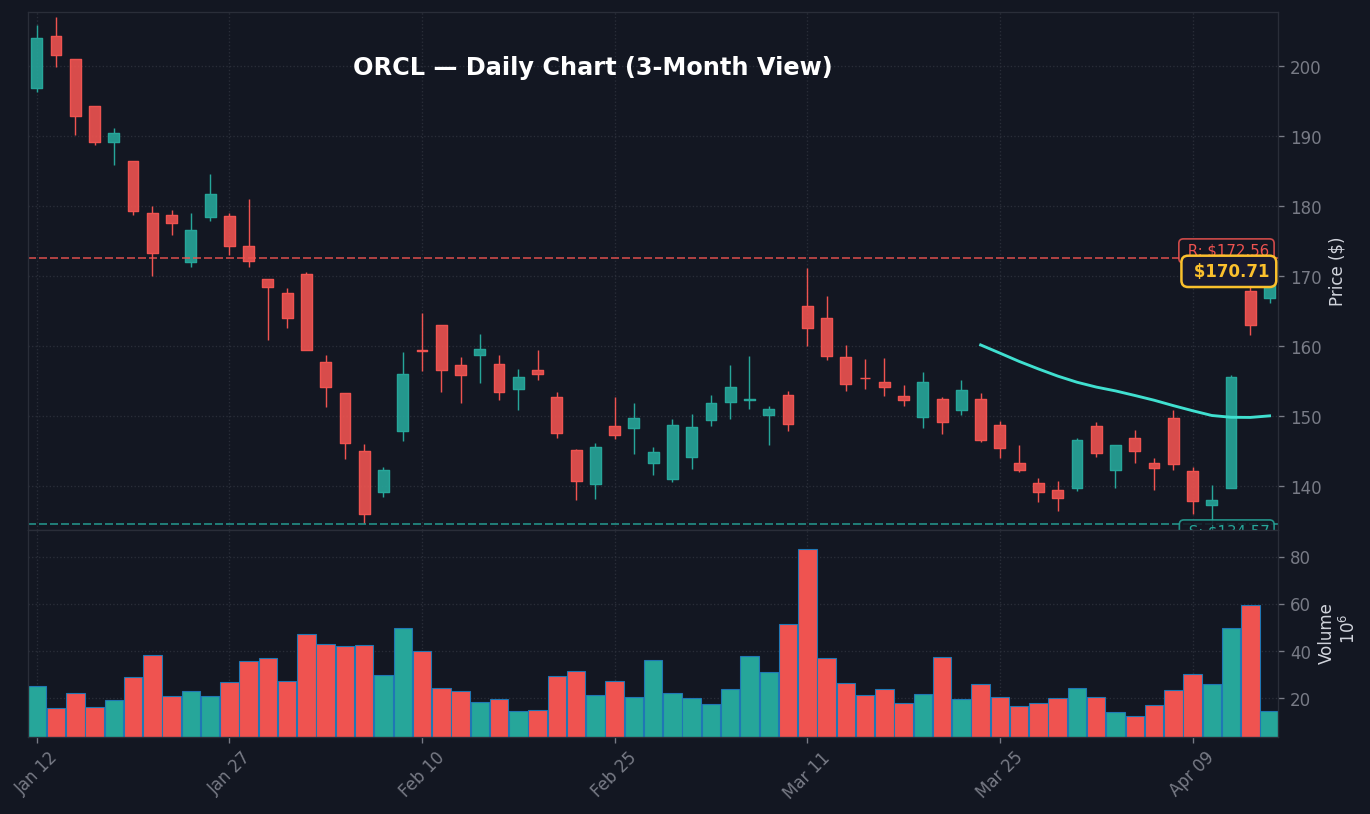
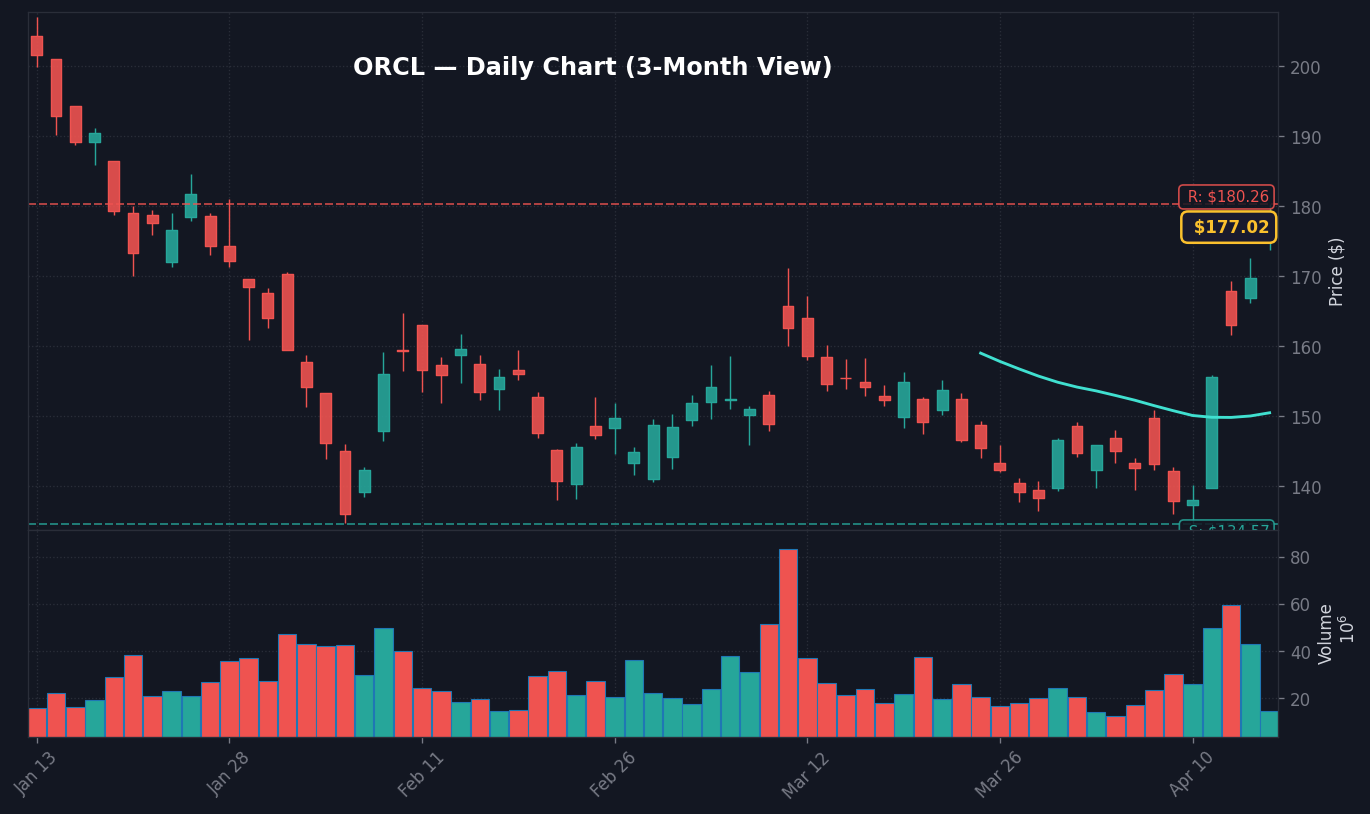
Oracle (ORCL) shares surged 5.54% to reach $172.04 in Tuesday’s pre-market session, fueled by the announcement that the company has been named a Leader in the 2026 Gartner® Magic Quadrant™ for Transportation Management Systems for the 19th consecutive time, according to the official corporate press release. What stands out here is the persistence of this market leadership, which signals to institutional investors that Oracle’s cloud-based supply chain suite retains a deep moat despite the broader software-as-a-service (SaaS) sector volatility. Per Finnhub data, the move is accompanied by 1.8x the 30-day average volume, suggesting that the institutional bid is both broad and concentrated as market participants recalibrate their exposure to enterprise software ahead of the Q1 earnings cycle. The takeaway for the session is clear: market participants are aggressively pricing in recurring revenue stability, which typically serves as a defensive hedge during periods of interest rate uncertainty.
The current macro context, defined by a 3.3% YoY CPI print as of March 2026 per Bureau of Labor Statistics data, has left the software sector vulnerable to valuation compression. However, ORCL’s ability to sustain its market position—validated by the 19th Gartner recognition—serves as a fundamental differentiator, according to analyst commentary compiled by FactSet. The 5.54% jump in share price reflects an immediate expansion in multiples, as traders rotate away from growth-at-any-cost names and into established platform players. This transition is being driven by a flight to quality, where cash flow visibility is prioritized over speculative AI top-line growth, which in turn provides a structural floor for ORCL near its historical resistance levels.
Market Reaction: Sector Rotation and Volatility Dynamics

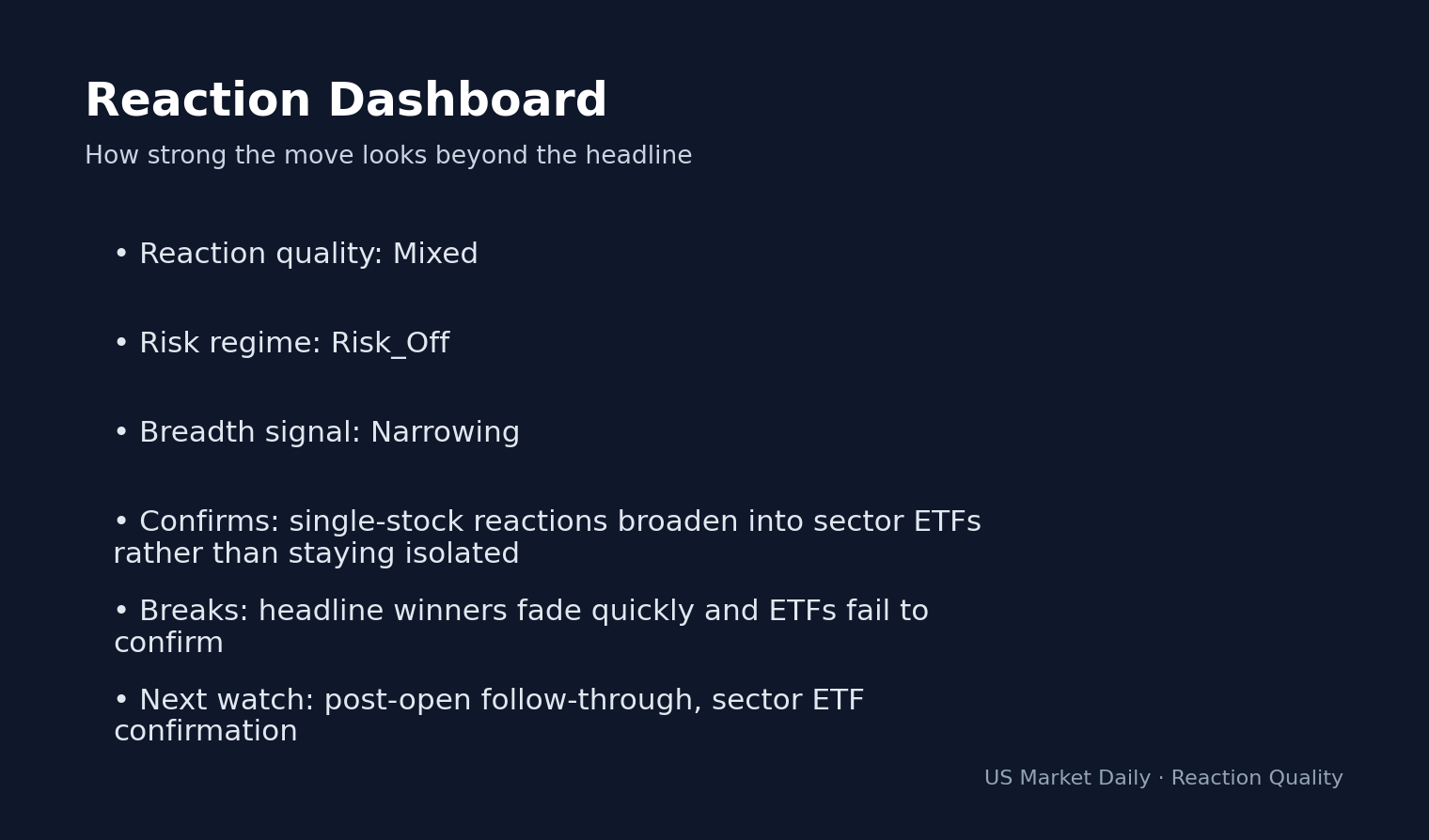
The broader equity market is responding with a nuanced rotation, as the S&P 500 Software & Services sub-index shows a 1.1% gain while the wider tech sector remains largely range-bound, per real-time market data. The VIX, currently trading at 18.4 against a 20-day average of 24.3, indicates that volatility is compressed, which historically allows for localized sector leadership to drive index performance without triggering systemic sell-offs. The disconnect is notable: while the broader market faces pressure from a 4.3% unemployment rate—a figure that has prompted concerns regarding consumer spending capacity—enterprise-facing entities like ORCL are outperforming because their sales cycles are tethered to operational efficiency rather than discretionary retail demand, according to institutional research notes.
Capital flows are migrating toward balance-sheet-heavy tech companies, reflecting a defensive positioning strategy that mirrors previous market regimes where interest rate sensitivity dominated the tape. The 1.31% drop in the broad Dollar Index over the last five days, as reported by Treasury market data, provides a tailwind for companies with significant international revenue streams, of which Oracle is a prime example. As a result, the outperformance of ORCL acts as a bellwether for the rest of the enterprise tech complex, signaling that buyers are ready to step in when a specific, verifiable catalyst—like the Gartner recognition—emerges to break the prevailing inertia, according to consensus estimates monitored on the KIS Open API.
Bull Case vs Bear Case for ORCL
The bull case for ORCL centers on the stock holding above the $168.50 breakout point, which would effectively validate the current momentum as a structural trend change rather than a mean-reverting event. If the $172.04 level holds, the next major hurdle for the shares is the $180.00 psychological resistance, a level that would represent a valuation re-rating consistent with expanded margins in the cloud division, based on current analyst projections tracked by FactSet. The bull case is supported by the strengthening of the company’s enterprise recurring revenue streams, which are currently insulating the stock from the broader macroeconomic headwinds associated with the 3.3% CPI print, according to company financial disclosures.
Conversely, the bear case is triggered if the price slips back below the $165.00 support level, which would negate the current technical breakout and suggest that the Gartner-linked enthusiasm is failing to sustain momentum in a risk-off environment. Should liquidity dry up and the volume drop back below the 30-day average, we could see a quick re-test of the $160.00 zone, where technical support has been consolidated over the past two months, according to trading platform volume profiles. The bear case is fueled by the risk that institutional traders might treat the current move as an exit opportunity rather than an accumulation point, which would signal that the market is prioritizing capital preservation over growth exposure, per market microstructure reports.
What to Watch Next
- Watch whether the volume remains above the 30-day average of 8.2 million shares, as this will confirm the sustainability of the current price action in ORCL.
- Key level: The $175.00 resistance level represents the next major technical obstacle for ORCL bulls, whereas $165.00 marks the critical floor for maintaining the current trend.
- If the broader S&P 500 (SPX) index fails to reclaim the 5,200 level by close of play, then we can expect a compression in tech premiums that may force ORCL to retreat toward its 50-day moving average, despite the positive industry news.
- Trigger: Watch for the upcoming quarterly earnings release in June, as that will provide the first concrete look at whether the Gartner recognition has translated into tangible contract wins in the transportation management segment.
Frequently Asked Questions
Why is the market moving right now regarding Oracle?
Oracle (ORCL) shares rose 5.54% to $172.04 following the news that it was named a Leader in the 2026 Gartner® Magic Quadrant™ for Transportation Management Systems for the 19th time. This event has sparked a rotation into enterprise software as investors prioritize companies with established moats.
What should investors watch next for ORCL?
Investors should monitor the $175.00 resistance level and the $165.00 support level to gauge the strength of the breakout. Additionally, tracking daily trading volume relative to the 30-day average will reveal if institutional demand remains high enough to sustain these gains.
How does the broader macro environment affect this ORCL move?
With CPI at 3.3% and unemployment at 4.3%, the broader market remains sensitive to rate cycles. However, ORCL is outperforming because its supply chain software is tied to operational efficiency, which serves as a defensive hedge during economic uncertainty.
This analysis is provided for educational and informational purposes only. It is not investment advice. Consult a qualified financial advisor before acting on any information presented here.