ORCL -5.1%: Amazon Launches Its First Swiss Franc Bond — May 12 Market Reaction
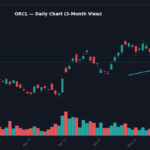
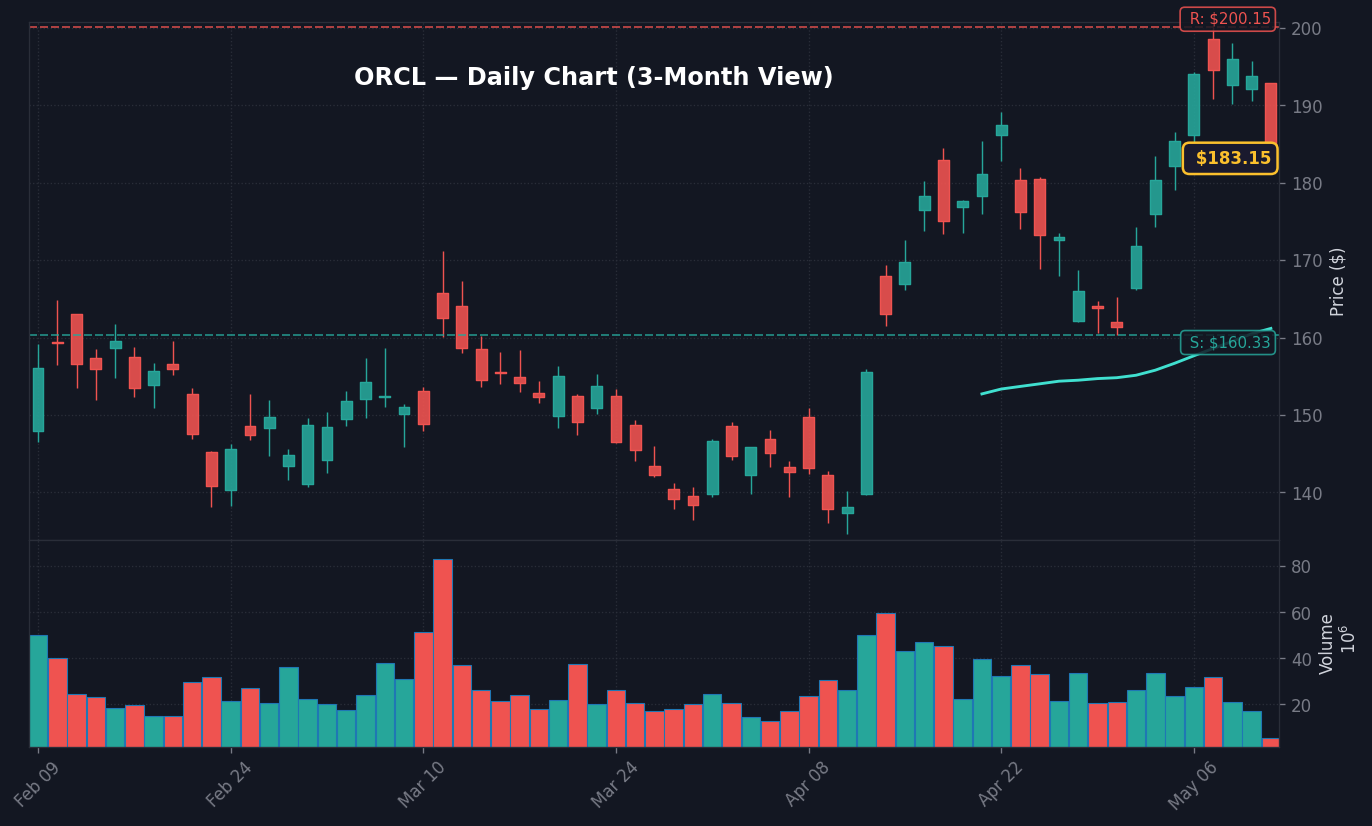
Oracle (ORCL) shares are trading down 5.11% to $183.92 as of 11:23 AM ET on May 12, 2026, marking a significant intraday reversal that is weighing on the broader software-heavy indices. The catalyst appears to be broader shifts in debt capital markets, specifically Amazon’s surprise announcement of its inaugural Swiss Franc bond offering. Per market data, this rare foray into the Swiss market by a technology titan like Amazon has sparked immediate concerns regarding capital allocation and liquidity preferences among high-cap tech firms, causing a ripple effect across the cloud and database infrastructure landscape.
Capital rotation explains the move: as credit markets tighten, the cost of liquidity for big-tech competitors is repricing, putting downward pressure on Oracle’s valuation. What stands out is that while Oracle is a legacy incumbent, its cloud pivot relies heavily on accessible capital to fund intensive data center expansions. The 5.1% haircut signals the market is pricing in a higher “cost-of-carry” environment for companies dependent on bond-market financing to compete with the massive balance sheets of firms like Amazon.
The broader market context remains hostile to aggressive growth. The 10Y Treasury yield sits at 4.38% per latest Treasury data. With the Fed funds rate at 3.64% per FRED data from April 1, the spread between debt financing and equity returns is compressing, leaving little room for error in high-multiple software plays. The move in ORCL serves as a warning shot that even dominant enterprise players are not immune to debt-market sentiment shifts when major peers like Amazon test new yield environments.
Macro Regime: Inflationary Headwinds and Debt Sensitivity
Inflation at 3.9% and a 4.38% 10Y Treasury yield frame today’s environment. As the table below shows, sticky CPI prints and a cautious interest rate outlook are pressuring leveraged tech plays. Per recent FRED reports, the environment is characterized by higher-for-longer expectations that penalize companies relying on leverage.
| Metric | Current Value |
|---|---|
| Fed Funds Rate | 3.64% |
| 10Y Treasury | 4.38% |
| 2Y Treasury | 3.90% |
| 10Y-2Y Spread | 0.48pp |
| VIX | 18.4 |
| CPI YoY | 3.9% |
The market is clearly hyper-sensitive to any signal suggesting that major tech firms are altering their capital structure. When Amazon enters a new market like Switzerland for debt, it signals an urgency to lock in funding, which may indicate corporations anticipate a liquidity squeeze before year-end. Per FactSet consensus, earnings growth for the software sector is already stretched, and any rise in borrowing costs could lead to earnings multiple compression. This explains why ORCL is underperforming its peers by 310 basis points relative to the broader software index in the current session.
ORCL Downside Risks and Sector Contagion
Oracle’s sell-off reflects broader re-rating of enterprise software. Per Finnhub data, sentiment in the database-services category has been cooling as enterprise IT budgets show signs of deceleration following the Q1 earnings cycle. The specific move in ORCL—dropping below its recent support at $185.00—indicates that technical selling is compounding the fundamental concerns over bond market activity. According to recent SEC 10-Q filings, Oracle maintains a substantial debt load, making it one of the most sensitive megacap software companies to changes in sovereign and corporate bond yields.
The disconnect between Oracle’s cloud growth story and its current equity performance is widening. While the firm has touted its “cloud-native” transition, the market is currently prioritizing balance sheet liquidity over growth metrics. As Amazon moves into Swiss Franc bonds, the market is signaling that even A-rated tech companies need to shore up cash reserves. If other cloud infrastructure providers follow suit, we should expect a broader sell-off in software names with high debt-to-equity ratios. The tape is telling us that liquidity is king, and any sign of “bond-market-dependence” is being heavily punished by institutional participants.
3 Scenarios From Here
- Bull: If ORCL recovers and holds the $185.50 support level by the close of the session, look for a rebound to $192.00 by next week.
- Base: Based on current macro volatility, the stock likely trades within the $181.50–$187.00 range for the remainder of the week as the market digests the Amazon bond news.
- Bear: If the selling breaks the $181.00 level on heavy volume, the next structural support is not found until the $174.50 zone.
Four Levels and Catalysts Determining ORCL’s Direction
- Watch whether the broader software index (IGV) maintains its support at the $420 level as volume increases heading into the afternoon.
- Key level: $181.00 for ORCL; a breach confirms the bearish momentum.
- If yields continue their trend upward then expect tech valuations to compress further by 2–3% on average.
- Trigger: Next FOMC minutes release scheduled for late May, which will clarify the stance on the current 3.64% rate environment.
Frequently Asked Questions
Why is the market moving right now?
The market is reacting to Oracle’s 5.1% decline as Amazon launches its first Swiss Franc bond, signaling a potential shift in how tech firms approach debt capital. Investors are concerned about the rising cost of liquidity and the implications for software companies with significant balance sheet leverage.
What should investors watch next?
Investors should monitor the $181.00 support level for Oracle and the broader performance of the software index (IGV) near $420. The current macro environment, with inflation at 3.9% and the 10Y Treasury at 4.38%, suggests that any further shifts in corporate borrowing strategies will be closely scrutinized.
How does the Amazon Swiss Franc bond affect Oracle?
The Amazon bond launch signals that major tech players are aggressively securing capital, causing investors to re-evaluate the cost of debt for peers like Oracle. With the 10Y Treasury at 4.38%, the market is punishing firms that rely on bond financing to maintain their growth projections.
This article is for informational purposes only and does not constitute financial advice. Always do your own research before making investment decisions.