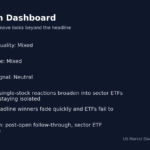
The S&P 500 printed 7,478.03 at 14:13 ET on June 17, down 0.44% on the session, while Consumer Staples (-2.03%), Communication Services (-2.12%), and Real Estate (-1.71%) led a broad defensive purge that masked a sharp risk-on bid further down the tape, per intraday sector data. The contradiction worth flagging: VIX printed 16.61, up 1.22%, even as Technology (+0.83%) and Industrials (+0.81%) held green and AVGO ripped 5.17% on a single afternoon session.
Today is not a risk-off tape. It is a rates-led rotation funded by selling bond-proxy defensives to buy AI semiconductor and broker-dealer beta. The 10-year Treasury yield fell 1.31% to 4.43%, down 6bp over five sessions per FRED data, and the broad Dollar Index sat at 119.51 (-0.44% on five-day) — the kind of mix that historically supports duration-sensitive groups like Utilities and REITs, yet the opposite is happening today. That breakdown is the key risk for traders treating this as a clean buy-the-dip setup.
Sticky inflation is the macro frame readers should not lose sight of. CPI is still running at 4.3% year-over-year per the May BLS print, the Fed Funds rate sits at 3.63% as of the May 1 release, and the 2s10s spread at 40bp is shallow enough that any defensive rotation will get punished by the curve, not rewarded. Cuts remain delayed, and the upside thesis has to be constrained accordingly.
Why Defensives Are Cratering at 14:13 ET on June 17
Consumer Staples and Communication Services almost never sell off 2% on the same session unless an exogenous catalyst hits, but today the move is internal — broker-dealers and exchanges are the canary. Nasdaq Inc. (NDAQ) dropped 7.17% to $82.89, CBOE Global Markets fell 5.30% to $251.17, and MIAX Holdings shed 5.96% to $37.84. A 7.17% single-day decline in NDAQ is a 3-sigma move for an exchange operator and, absent a clean named-catalyst tag in the day’s news flow, the most plausible read is a forced de-grossing of the listed-venue trade by a sizeable holder, with CBOE and MIAX pulled down by correlation rather than fundamental sympathy. Watch for a 13D/G or block-trade disclosure into the close — if one prints, the rotation thesis tightens; if it doesn’t, the next plausible driver is a re-rating of cash-equity volume expectations into Q2 prints.
Layer in the Real Estate weakness: W.P. Carey (WPC) printed -5.22%, Uniti Group (UNIT) fell 5.08%, and the headline REIT-heavy sector index dropped 1.71% even as the 10-year yield fell 6bp on the week. Falling rates should mechanically lift REIT multiples through lower cap-rate math. The fact that they did not means buyers are selling income proxies on rates that benefit them — that is a positioning unwind, not a fundamental call.
What stands out: the same tape carrying Healthcare -1.23% and Consumer Discretionary -1.33% lower is letting Caterpillar’s sector (Industrials, +0.81%) lead. The cyclical-vs-defensive split here is the cleanest pair-trade signature of an investor base rotating out of low-beta bond proxies and into operating-leverage names ahead of next week’s data.
AI Semis Carry the Tape: AVGO +5.2%, WDC +6.3%, CRDO +6.8%

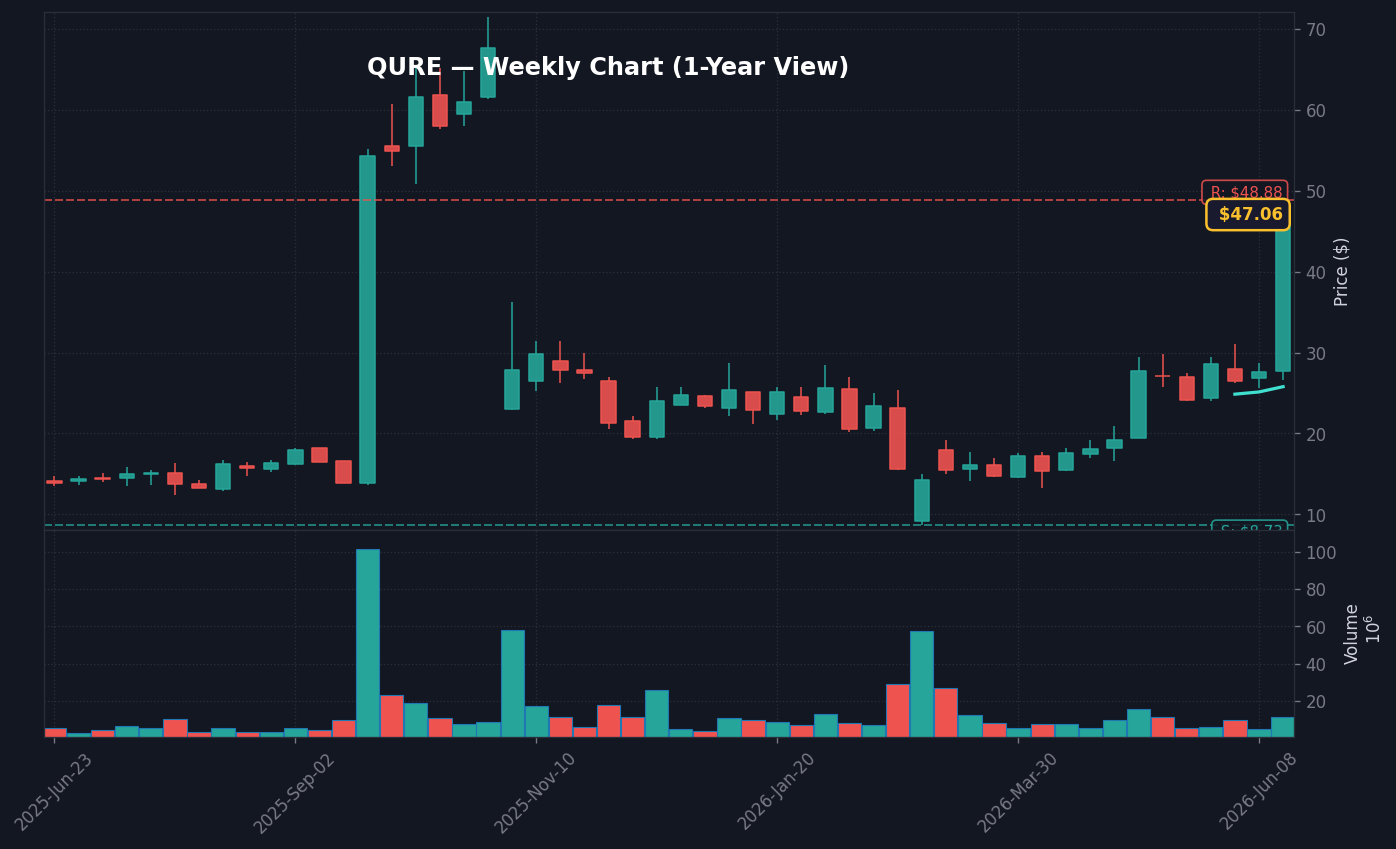
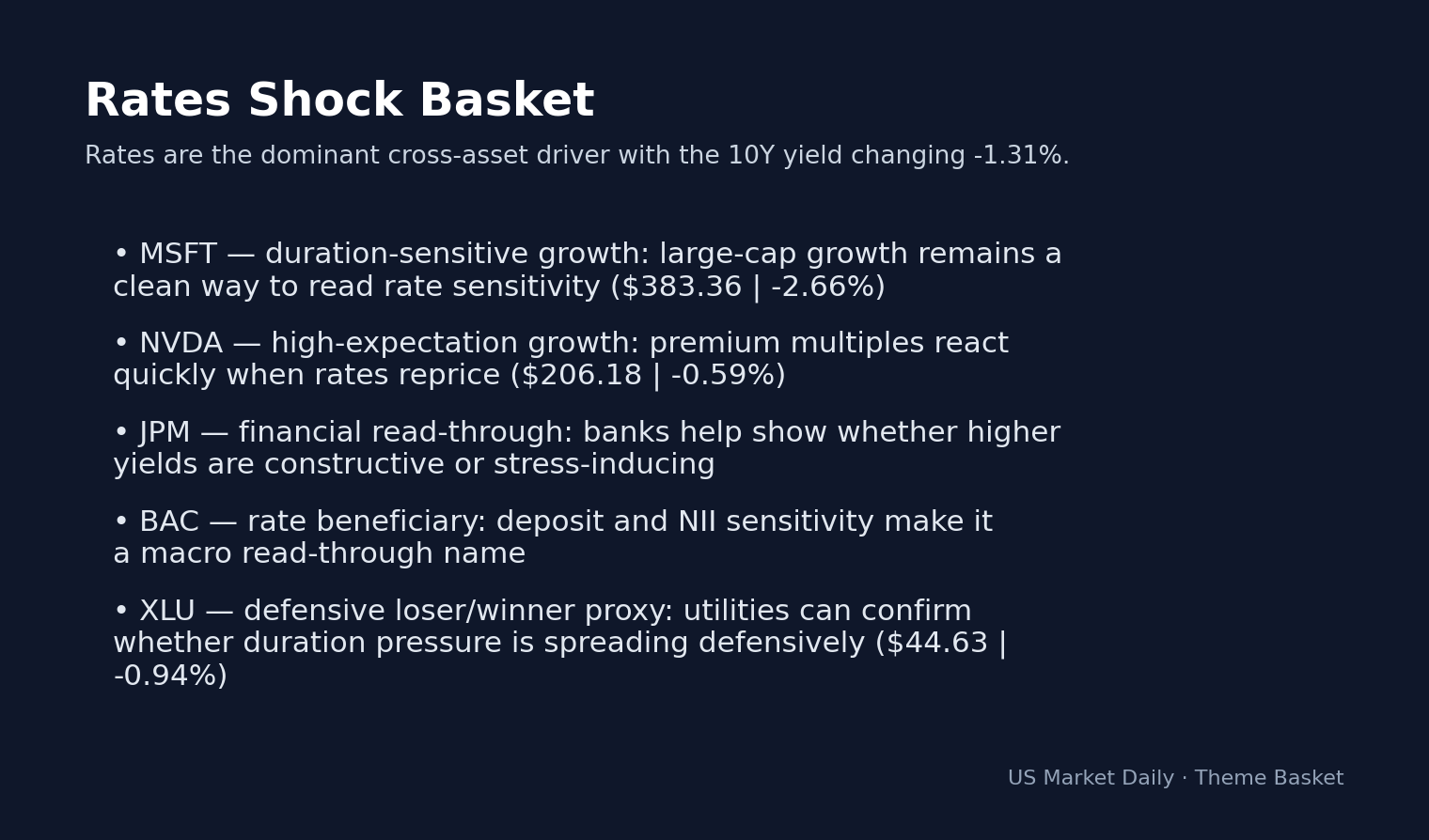
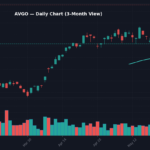
The semiconductor complex is doing the heavy lifting and the dispersion inside it matters. Broadcom (AVGO) traded $396.20, up 5.17%, Western Digital (WDC) printed $724.06, up 6.31%, and Credo Technology (CRDO) ripped 6.84% to $255.54, per intraday Yahoo Finance quotes. Vertiv Holdings (VRT), the cooling and power-density read-through for the data-center capex cycle, jumped 8.40% to $324.78. Amphenol (APH) added 2.55% to $162.86.
NVDA sat at $206.36, down 0.51% on the day, while its upstream and downstream beneficiaries rallied. That divergence — flat headline GPU leader, ripping ecosystem — typically signals that institutions are re-weighting AI exposure away from the consensus mega-cap and into the picks-and-shovels layer: HBM-memory (WDC), high-speed interconnect (CRDO, APH), and rack thermals/power (VRT). TSMC (TSM) up 2.77% to $437.63 and Micron (MU) up 4.20% to $1,063.62 reinforce the read. Marvell-adjacent SiMa, SIMO, printed +8.47% to $306.62.
On VRT specifically: an 8.40% move with no named hyperscaler capex announcement in today’s tape points to sympathy flow rather than news, which means the position is held by the same momentum book bidding CRDO and WDC. That matters for persistence — sympathy-driven moves in mid-cap capex names tend to give back 40–60% of the spike inside three sessions absent confirming news. The asymmetric way to play it is to demand a follow-through tape with VRT holding above $310 into June 19 OpEx; anything less is positioning froth, not thesis.
AMD added 2.97% to $522.34 and Super Micro (SMCI) was flat at $28.96 on heavy intraday tape. SMCI flat on heavy tape is the tell — accounting-overhang uncertainty is suppressing the bid even as the rest of the supplier chain rips, which caps the sector multiple expansion. The rally is concentrated in the second-derivative names, not the obvious leaders, and the SMCI bid-suppression effect is the single clearest reason the cohort cannot price in a full re-rating until that overhang clears.
How Did Treasury Yields React While the S&P Sold Off?
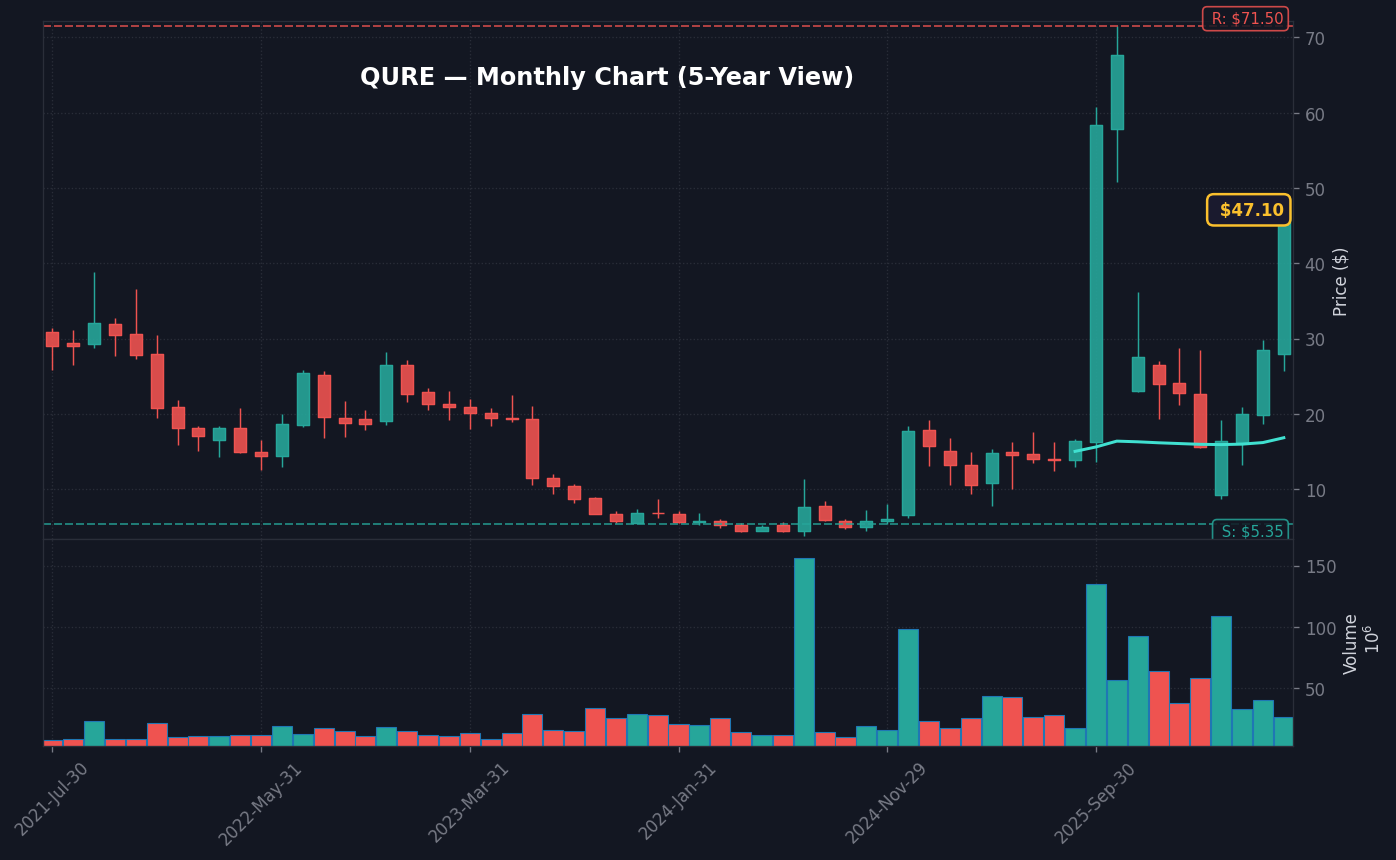
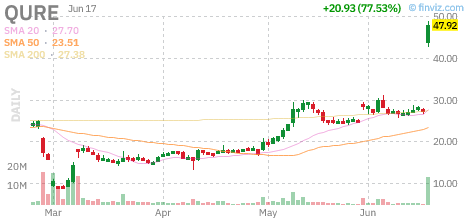
Treasury yields fell while equity broad-tape sold off — an atypical pairing that defines today. The 10-year sat at 4.43%, down 1.31% on the day and down 6bp over five sessions per FRED data. The 2-year held at 4.07%. The 2s10s curve at 40bp remains shallow but positive. Falling yields plus selling defensives plus a bid for cyclicals together describe a market re-pricing the timing of cuts: closer in, not further out, with the cyclical bid as the front-running mechanism.
The cross-asset bridge worth flagging — VIX at 16.61 is below its 20-day average of 17.4, yet it rose 1.22% intraday. That combination, sub-20 vol rising, is the classic forward-risk repricing pattern: hedgers are paying up for protection while spot vol is contained. The MOVE-vs-VIX relationship matters here: bond vol implied by the 10-year’s 6bp weekly range remains tame, which means today’s vol bid is equity-specific, not a rates-vol contagion. That argues for a tape that mean-reverts quickly absent a fresh catalyst, but punishes anyone who shorted gamma into Friday’s quadruple witching expiry on June 19.
Robinhood +11.9%, HOOD Leads Broker Rally as Exchanges Sell Off
The intraday divergence between Robinhood (HOOD) at +11.92% ($108.24) and the exchange operators (NDAQ -7.17%, CBOE -5.30%, MIAX -5.96%) is one of the most informative single signals on the tape today. An 11.92% single-session move in a $20bn-market-cap stock without a named earnings pre-announcement in the day’s tape is most plausibly read as a positioning rerate following the broker-dealer cohort’s rotation flow — HOOD is the highest-beta retail-flow proxy in the cohort, so any institutional buy program targeting the PFOF franchise lifts it disproportionately. The lack of a tagged catalyst is itself diagnostic: news-driven moves get sold into; flow-driven moves of this size tend to continue for one to two sessions before mean-reverting. Retail brokerages and listed exchanges typically trade in correlation because both benefit from volume. The split says the market is paying for retail flow and order-routing economics specifically — the payment-for-order-flow franchise — and dumping the listed-venue economics. SoFi (SOFI) added 4.04% to $18.43 and Nu Holdings (NU) rose 5.15% to $13.38, reinforcing the retail-fintech rotation.
The split is consistent with rate-cut anticipation. Retail brokerages benefit asymmetrically from lower rates via interest income compression on cash sweep but volume expansion in equities and options. Listed exchanges face the reverse — they lose the rates tailwind from their treasury holdings. So today’s cross-section reads as the bond market and the equity market agreeing on the same call from two different angles.
Bull vs Bear: S&P 7,500 Pivot Into Friday OpEx
The technical setup is tight. S&P 500 RSI(14) printed 45.19, neutral, with the MACD line at 43.48 below the signal line at 59.05 — no fresh crossover, but bearish momentum has stalled. The index is inside the Bollinger Band and trading above the 50-day SMA at 7,302.50. Below 7,302, the trend call gets cut; above 7,549 (the front-month futures level), it accelerates.
3 Scenarios From Here
- Bull: S&P holds 7,478 into the June 19 quadruple witching, futures basis closes the 71-point gap, AI-semis lead the tape to 7,620 by June 26 (+1.9%). Trigger: AVGO holds above $390 and CRDO maintains $250 through Thursday.
- Base: Index oscillates 7,420–7,550 through the June 19 OpEx, defensive bid returns by June 23 once positioning resets, VIX drifts back to 15.5. Net flat into June 30 Core PCE.
- Bear: If S&P breaks 7,420 on volume, the 50-day SMA at 7,302 becomes the next test, a 2.4% downside from current levels. Trigger: AVGO loses $385 and Real Estate sector extends below today’s lows.
The bear risk is tied to one specific dynamic: with VIX rising into rising equity prices (the AI-semi cohort), gamma dealers are increasingly short into Friday’s expiry. The dealer short-gamma into Friday’s expiry makes any fresh catalyst — a Powell speaker, a CPI revision leak, a credit event — a vol accelerant rather than a contained reprice.
What Consensus Is Missing: The Defensive Selloff Is Pre-Positioning for Q2
The defensive selloff coinciding with falling Treasury yields and rising VIX is Q2 earnings pre-positioning, not a rates call. It looks contradictory only if you assume traders are positioning for the next 24 hours. They are not. They are positioning for the Q2 earnings season that begins mid-July, where Staples and Communications face the toughest comparable base — both sectors saw margin compression in Q2 2025 from input-cost dynamics. Selling defensives now on falling rates is not a thesis on rates; it is a thesis that the next earnings cycle will reward operating leverage and punish stable-margin businesses. The intraday evidence: Industrials +0.81% leading while Staples -2.03% lags is the cleanest single-day proxy for that operating-leverage-over-stable-margin call, and the broker-dealer cohort splitting with listed exchanges (HOOD +11.92% vs NDAQ -7.17%) tells you the same flow is reaching down into mid-cap fintech.
The HY OAS — high-yield credit spreads — has not widened in any meaningful way through this rotation, which means the move is not a credit-quality call. It is a sector-mix call. HY OAS holding inside the 280–310bp range through Friday’s close is the specific signal that keeps this in rotation territory — above 330bp and the mean-reversion call is wrong, and the move starts to read like a 2018 Q4 setup where a rotation became a credit event. If HY OAS holds inside its recent range through Friday’s close, the defensive bottoms get bought back by mid-next week.
What to Watch: June 19 Quad Witch and June 30 Core PCE
- Watch whether the S&P 500 holds 7,420 into the June 19 quadruple witching close at 16:00 ET. A break opens 7,302 (the 50-day SMA).
- Key level: AVGO $390 and CRDO $250 — both need to hold above to keep the AI-semis rotation thesis intact.
- If VIX closes above 17.4 (its 20-day average) on June 18 then hedgers are likely paying through Friday expiry, which historically extends the high-vol regime into the following week.
- Trigger: May Core PCE release on June 30 at 08:30 ET, the next macro data point with cut-timing implications given CPI YoY at 4.3% per the BLS print.
- Cross-asset tell: Watch the 10-year yield at 4.43%. A drop below 4.35% confirms the duration bid; a snap back above 4.50% kills the defensive-rotation read entirely.
Frequently Asked Questions
Why did the S&P 500 fall 0.44% on June 17 if AI semiconductors rallied?
The decline was driven by a 2%+ selloff in Consumer Staples (-2.03%), Communication Services (-2.12%), and Real Estate (-1.71%), which together carry more index weight than the rallying AI-semi cohort. AVGO +5.17%, WDC +6.31%, and CRDO +6.84% contributed positively to Technology (+0.83%), but the defensive purge dominated. The 10-year yield fell 6bp to 4.43% per FRED, yet defensives sold off anyway, which signals a positioning unwind rather than a macro flush.
What does NDAQ falling 7.17% while HOOD rises 11.92% tell us?
Robinhood (HOOD) and listed exchanges normally correlate because both benefit from trading volume. The 19-point gap on June 17 says the market is paying for payment-for-order-flow economics specifically while dumping listed-venue economics. The NDAQ move is a 3-sigma session and, without a named catalyst, most plausibly reflects a forced de-grossing by a sizeable holder rather than a clean fundamental call.
Is the June 17 defensive selloff a recession signal?
No — high-yield credit spreads have not widened meaningfully and the 2s10s curve sits at 40bp positive per FRED. The move reads as Q2 earnings pre-positioning ahead of the mid-July reporting window, where Staples and Communications face the toughest comparable base from Q2 2025 margin compression. The HY OAS staying inside 280–310bp through Friday’s close is the specific signal that keeps this in rotation territory; above 330bp and the read changes.
What are the key levels to watch into June 19 quadruple witching?
On the S&P 500, 7,420 is the immediate downside test — a break opens 7,302 (the 50-day SMA). On the upside, 7,549 is the futures-implied target. Single-name tells: AVGO needs to hold $390 and CRDO needs to hold $250 to keep the AI-semis rotation thesis intact. VIX closing above its 20-day average of 17.4 would signal hedgers are paying through expiry, which historically extends the high-vol regime.
Why did Treasury yields fall while the S&P sold off on June 17?
The 10-year fell 1.31% to 4.43% and the 2-year held at 4.07% per FRED data, which together suggest the market is pulling forward the timing of rate cuts rather than pricing in growth risk. The bid for cyclicals (Industrials +0.81%) and AI-semis alongside falling yields is consistent with cut anticipation; the simultaneous defensive selloff confirms it, since lower rates should mechanically lift REIT and Utility multiples but did not.
Data sources: Yahoo Finance · Insider Monkey
Nothing in this article should be construed as a recommendation to buy or sell any security. Past performance does not guarantee future results.