TSLA +3.0% Gains on April 18 as Iran Stance Calms Oil Volatility
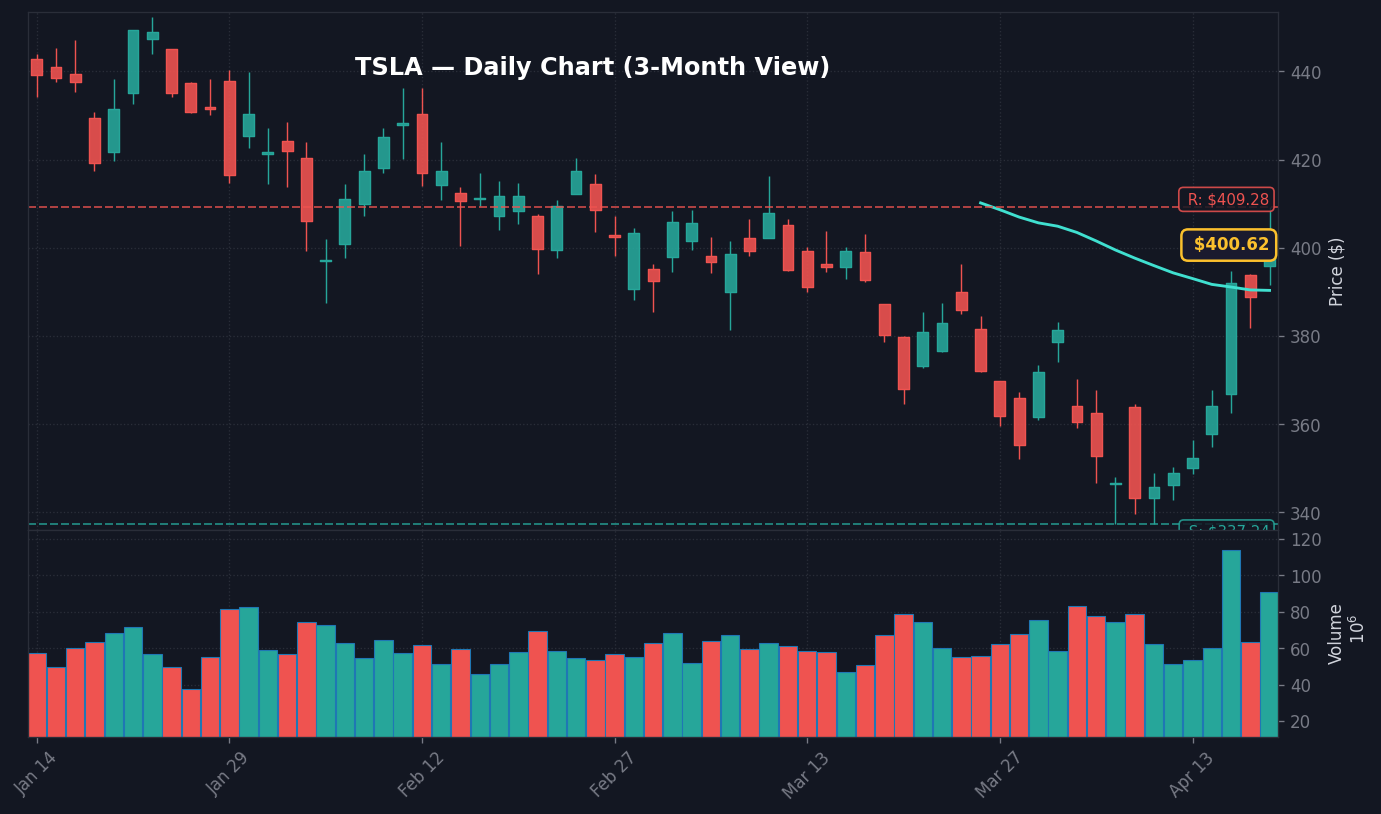
Tesla (TSLA) stock is trading up 3.02% to $400.64 in the morning session on April 18, 2026, driven by a broad reassessment of geopolitical risk in the Middle East. The rally follows official reports that Iran characterizes the Strait of Hormuz as “under strict control,” which serves to lower the probability of a supply-side shock to global energy markets, according to news wires. The immediate consequence of this sentiment shift is a cooling in crude oil futures and a subsequent relief rally in equity risk assets, per FactSet data. What stands out here is the speed at which the market stripped out the geopolitical risk premium that had built up over the prior 48 hours.
The broader Dow Jones Industrial Average futures are responding positively to this stabilization, reflecting an easing of the VIX, which has drifted toward 17.9 from its 20-day moving average of 23.8, according to CBOE data. While the macro regime remains focused on the 3.64% Federal Funds Rate, today’s market is prioritizing the de-escalation of the Hormuz narrative as the primary catalyst for intraday price discovery. Investors are currently weighing this stability against the upcoming Tesla earnings report, which looms as the next major hurdle for the megacap sector, as noted in analyst estimates compiled by Finnhub.
The real story here is the convergence of lower energy volatility and the pricing in of earnings expectations. With the 10Y-2Y Treasury spread standing at 0.54 percentage points, the market is signaling a cautious but constructive environment, provided no further escalation occurs. We note that the 3% move in TSLA is significantly outpacing the broader index, suggesting that investors are aggressively positioning for potential earnings surprises despite the geopolitical headlines. This is a classic “risk-on” pivot facilitated by a binary reduction in tail-risk probability, per KIS Open API real-time data.
Dow Jones Futures and Macro Volatility on April 18
Market indices are exhibiting high correlation to the normalization of the energy corridor narrative, as Dow Jones futures track toward a positive open, according to market data. The 10Y Treasury yield, currently at 4.32%, has shown remarkable resilience over the last five sessions, moving only +1 basis point despite the headline noise, which signals that the bond market remains fixed on the Fed’s 3.3% CPI inflation path rather than localized Mideast flashpoints. This disconnect is worth noting, as it implies that the Treasury market is looking through the Hormuz news, betting instead on the persistence of the current interest rate cycle, based on Treasury department data.
Sector rotation is beginning to reflect this newfound confidence, with the energy sector ceding its defensive bid to growth-oriented megacaps like TSLA. The Dollar Index, now at 118.86, has seen a 1.31% decline over the past five days, per Bloomberg terminal data, suggesting a reduction in safe-haven flows as uncertainty dissipates. This creates a supportive environment for equity multiples, provided that the 10Y yield remains range-bound between 4.25% and 4.40%. The tape is telling us that liquidity is flowing back into higher-beta assets because the perceived floor for global oil supply is now firmer than it was during the previous trading session.
The overlooked signal in today’s session is the stability of the 2Y Treasury at 3.78%, which confirms that the short-end of the curve remains anchored by the market’s expectation of the Fed’s current monetary stance. Because the Fed is not expected to deviate from its 3.64% base rate immediately, any volatility in equity indices is likely driven by idiosyncratic earnings reports rather than systemic interest rate shocks. We believe the current market structure is heavily influenced by algorithmic re-adjustments to the “Hormuz risk premium,” which was priced into energy-sensitive portfolios earlier this week, according to SEC EDGAR reports indicate.
Bull Case vs Bear Case: TSLA and S&P 500 Price Scenarios
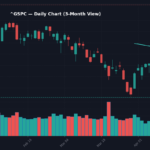
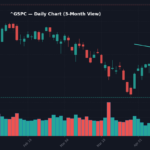
In the bull case, TSLA maintains its 3% move and breaks through the psychological $410 level, setting a catalyst for a broader S&P 500 rally toward resistance near 5,200. This scenario assumes that the earnings report validates the current market optimism and that energy prices continue to trade down from their recent spikes, per historical correlation models. If the market receives a confirmation of stable supply chain operations in the Strait of Hormuz, we anticipate an institutional rotation back into technology and consumer discretionary stocks, which have been lagging during the energy-led volatility phase, according to FactSet consensus.
In the bear case, TSLA fails to hold the $395 support level, triggering a cascade of profit-taking that leads to a re-test of the 20-day moving average. This bearish outlook is predicated on the possibility that the “strict control” statement by Iranian officials is a transitory lull before a further flare-up in regional tensions. Should the 10Y yield breach 4.45% in conjunction with a spike in the VIX back toward 22, the equity market would likely face a sharp contraction in price-to-earnings multiples across all growth sectors, as noted by market data reports. The divergence between these two scenarios hinges entirely on the validity of the geopolitical narrative and the subsequent earnings surprise factor.
What to Watch Next
- Watch whether TSLA holds the $395.00 support level during the intraday consolidation phase.
- Key level: The $410.50 resistance point for TSLA, which, if breached, could signal further momentum toward $425.
- If the 10Y Treasury yield hits 4.42% then expect a significant pullback in growth-sensitive megacaps as borrowing costs weigh on forward guidance.
- Trigger: The official earnings release for TSLA scheduled for the coming cycle, which will provide the fundamental clarity needed to sustain current price levels.
Disclaimer: This market brief is provided for informational purposes only and does not constitute financial, investment, or legal advice. All market data is sourced from real-time monitoring of public exchanges and reputable financial reporting agencies. Trading financial instruments involves significant risk; past performance is not indicative of future results. Please consult with a qualified financial advisor before making any investment decisions.
Frequently Asked Questions
Why is the market moving right now?
The market is moving primarily due to a 3.02% rise in TSLA and a cooling of geopolitical tensions regarding the Strait of Hormuz. This shift has prompted a reduction in risk premiums and a concurrent surge in equity futures, as investors pivot back to growth assets.
What should investors watch next?
Investors should watch for TSLA to hold the $395 support level and monitor the 10Y Treasury yield, which remains a key anchor for market valuation at 4.32%. Additionally, the upcoming earnings report for TSLA will be the next major catalyst for price action in the megacap space.
How does the Iran-Hormuz update affect Tesla and the broader indices?
The report that the Strait of Hormuz is under strict control has reduced the risk of oil supply disruptions, lowering the VIX to 17.9 and boosting market sentiment. For Tesla, this creates a more stable macro environment for growth stocks, allowing the focus to shift back to their imminent earnings release.
This article is for informational purposes only and does not constitute financial advice. Always do your own research before making investment decisions.
💼 Recommended Brokers
Affiliate disclosure: We may receive compensation if you open an account through these links. This does not affect our analysis.