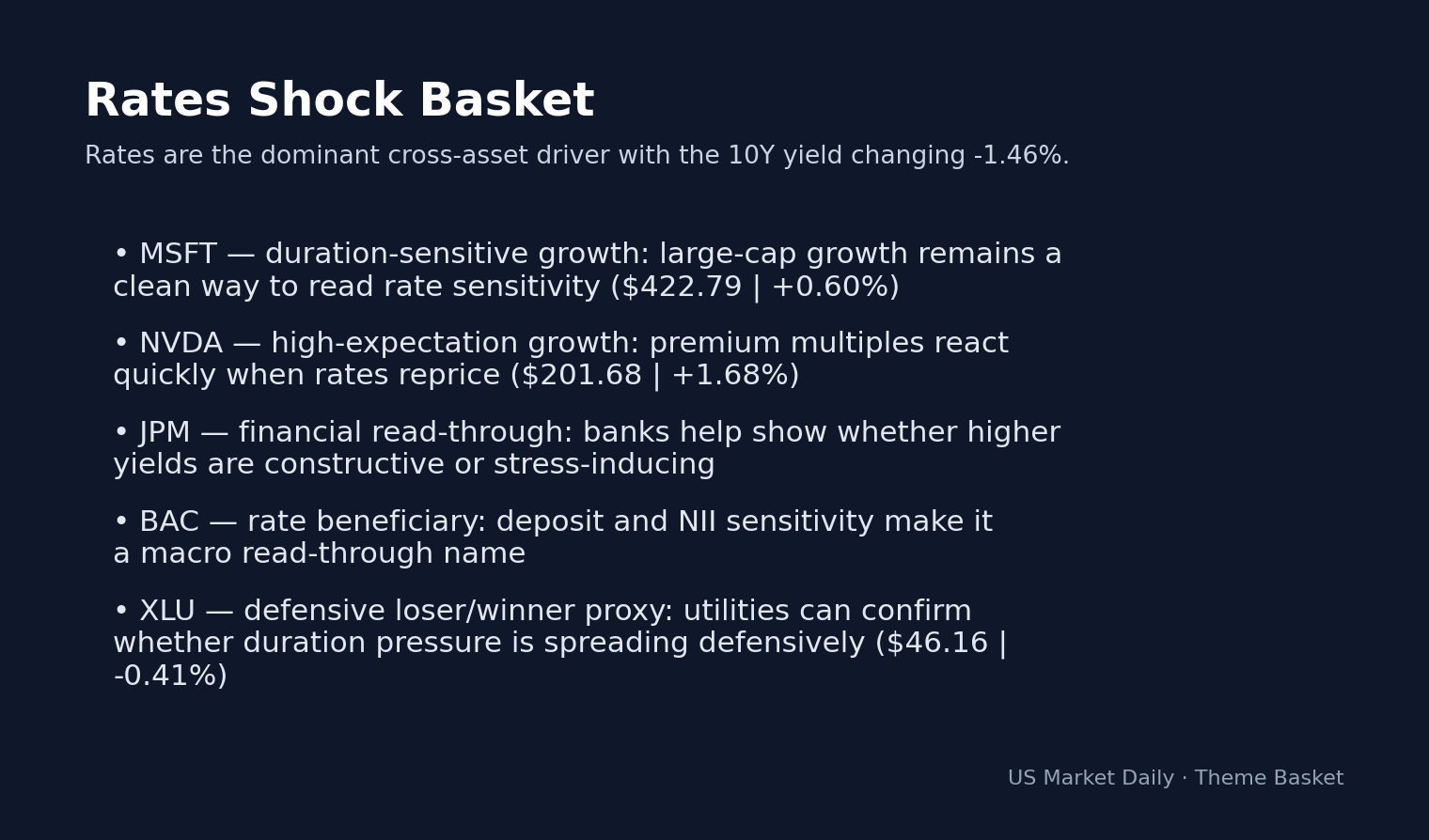
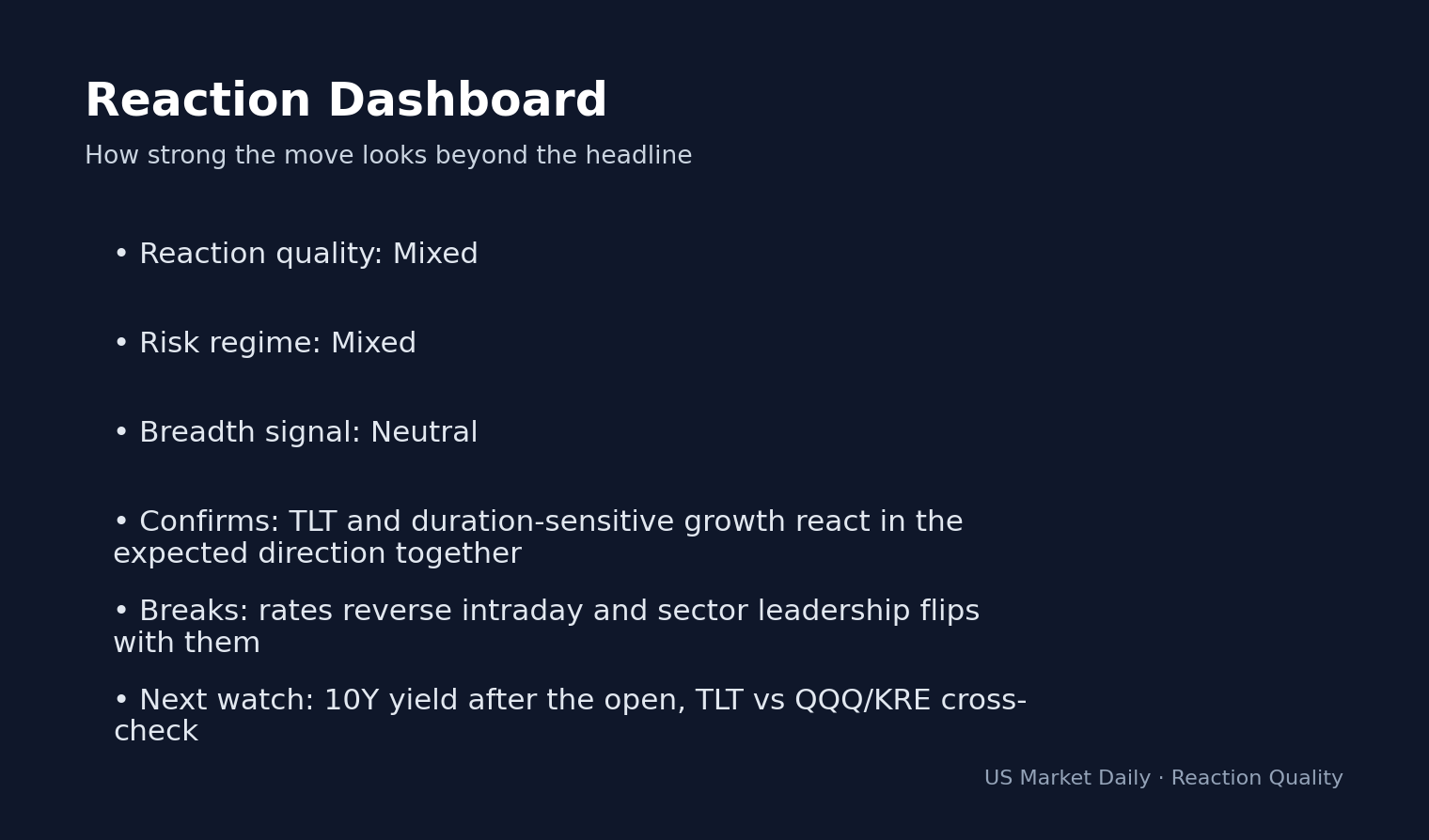
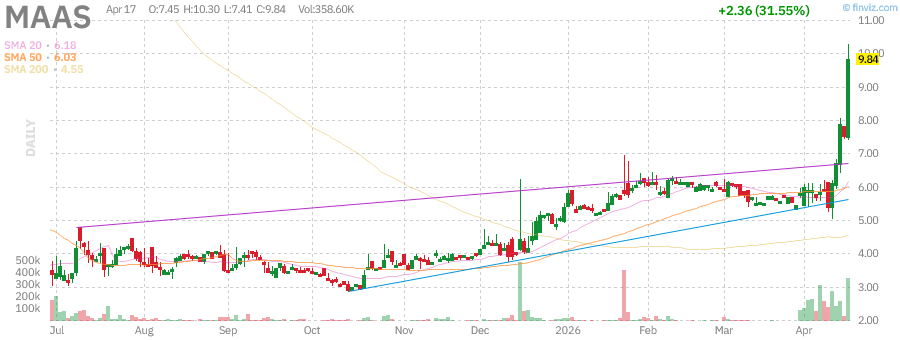
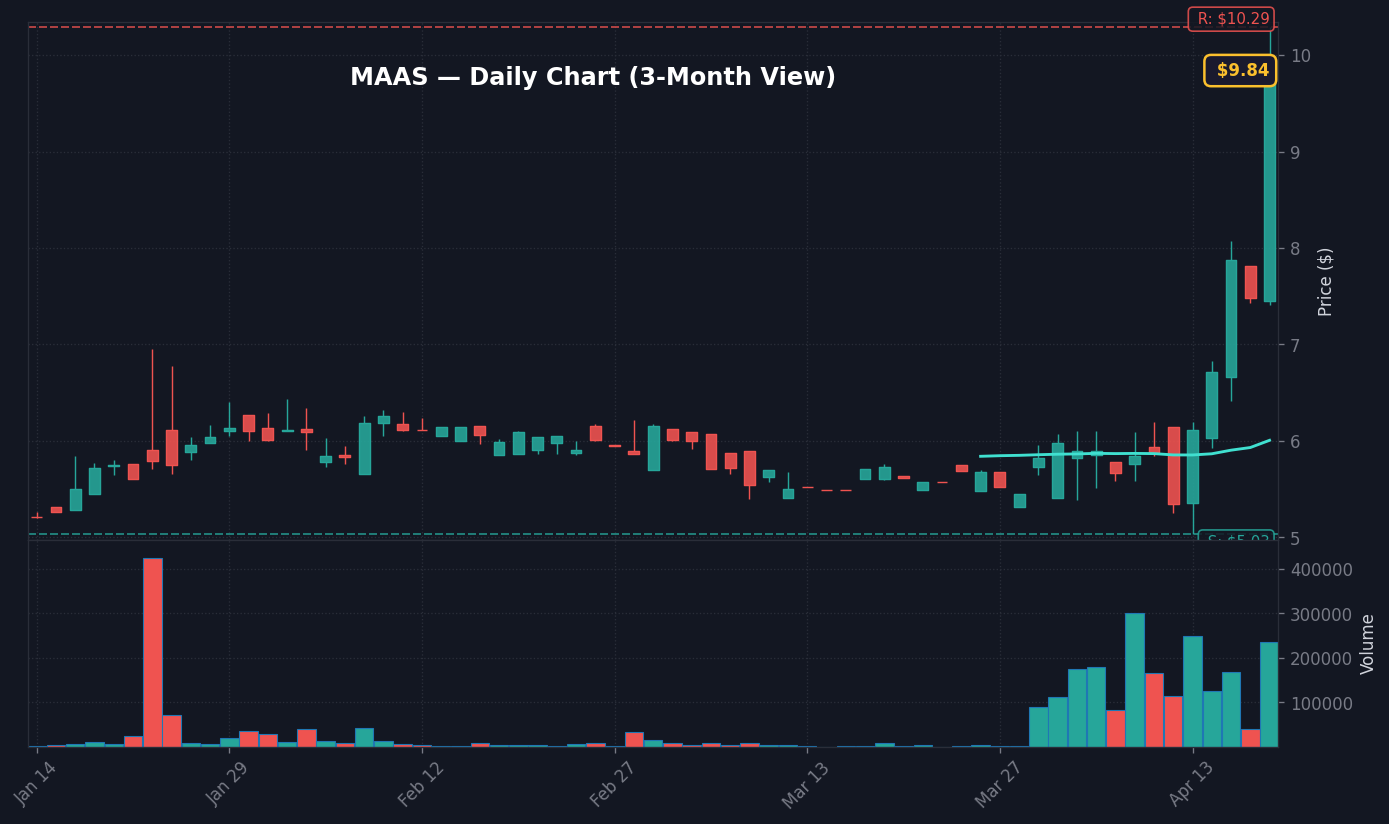
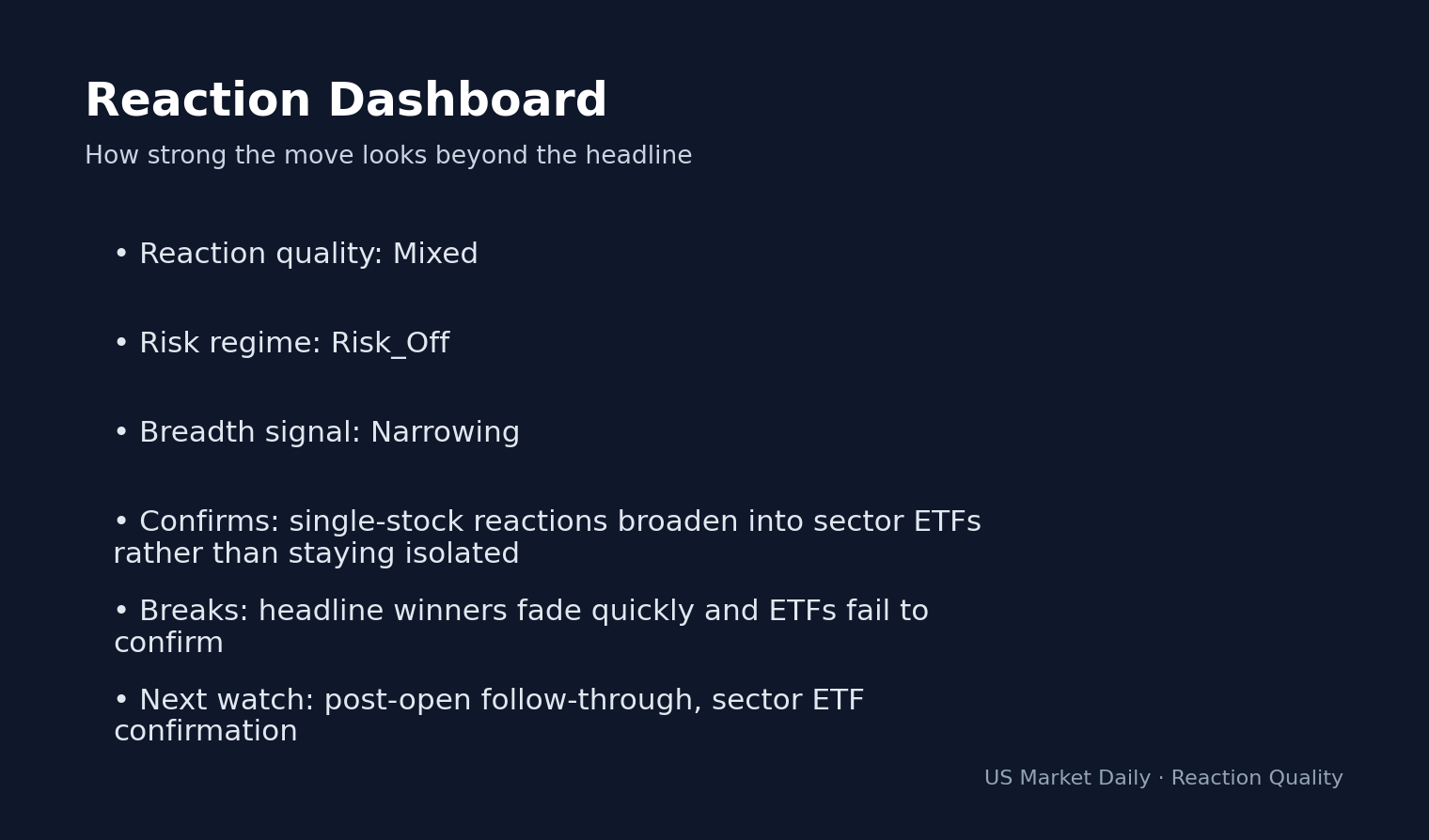
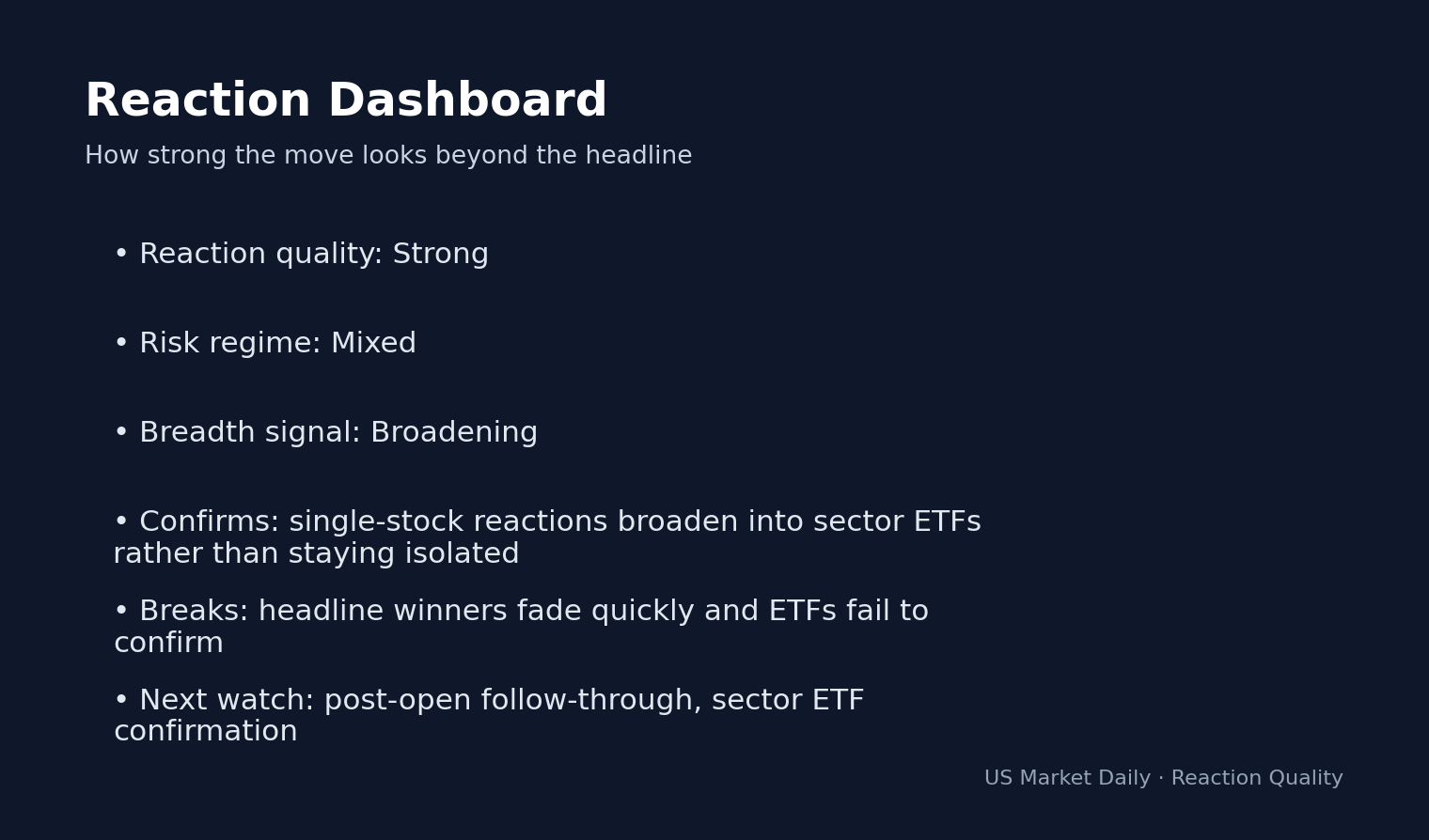
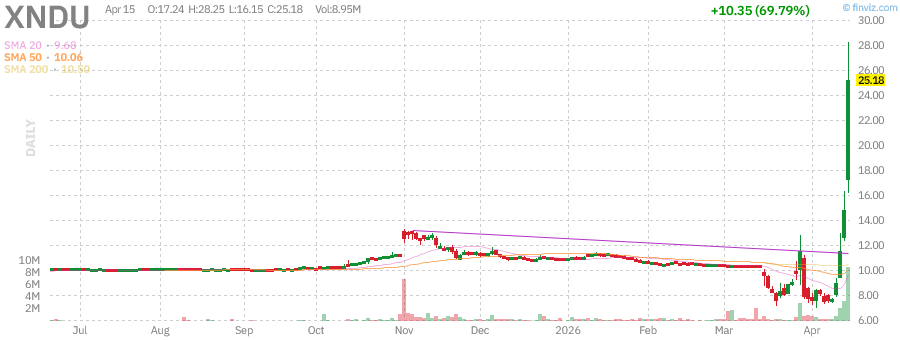
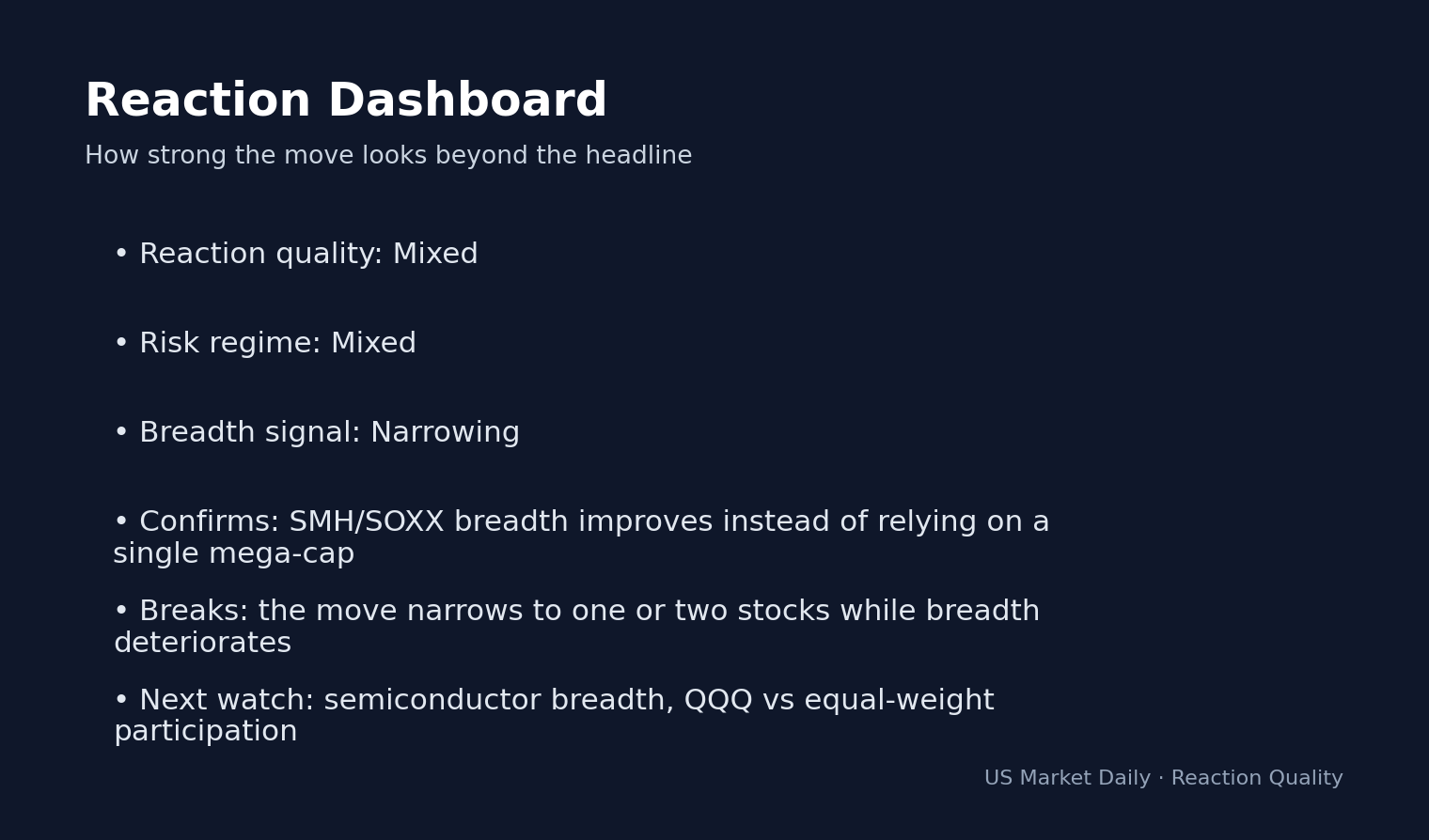
Theme basket card mapping the current market setup into the most relevant stocks. · Generated in-houseReaction dashboard card showing whether the move looks broad, fragile, or mixed. · Generated in-houseMAAS daily chart with SMA 20/50/200 and volume — source: Finviz, April 18, 2026 · Chart: Finviz
By Jungwook Shin · Updated April 17, 2026
Updated: April 17, 2026 at 04:44 PM ET · Reading time: 5 min · Author expertise: Small-Cap Equity Analyst
Why trust us: We separate factual market inputs from interpretation and link our process below.
S&P 500 Futures Rally 1.19% to 7161.0 as Market Sentiment Shifts
The S&P 500 closed the regular session on April 17, 2026, at 7,126.06, reflecting a robust 1.20% gain, while futures for the index indicate continued momentum with a 1.19% move to 7,161.0 as of 04:44 PM ET. This overnight development is driven by a broad reassessment of risk, fueled by technical breakouts across major index components and a cooling in interest rate volatility. The primary takeaway here is that market participants are aggressively pricing in a regime of lower yield volatility, which in turn acts as a massive tailwind for equity multiples. Worth noting, the VIX index retreated 2.56% to 17.48, signaling a meaningful contraction in the cost of protection, as per market data.
What stands out here is the divergence between the equity rally and the sharp decline in energy sector performance, which fell 2.76% during the session. This disconnect suggests that investors are rotating away from inflation-sensitive cyclical sectors toward high-beta growth opportunities. The overnight price action confirms that liquidity conditions remain supportive of risk-on behavior, despite the S&P 500 RSI hovering at 96.0, a level that technically suggests a severely overbought condition. According to FactSet, the rapid move higher indicates that institutional positioning is playing catch-up, triggered by the absence of negative catalysts in the overnight wires.
The real story lies in the yield environment, with the 10-Year Treasury yield dropping 1.46% to 4.25%. This compression in long-end yields is the primary engine behind the 1.53% gain in the technology sector, as discounted cash flow models for high-growth firms recalibrate to lower discount rates. Per Treasury data, the 10Y-2Y spread remains at 0.54pp, indicating that the yield curve is not signaling imminent recessionary pressure, which provides a comfortable macro backdrop for equity valuations to expand. Traders should remain alert to the possibility that this initial knee-jerk move higher is merely a prelude to a broader consolidation phase once liquidity depth increases in tomorrow’s session.
MAAS Daily Chart — 3-month view with SMA50/200
NVDA and TSLA Lead Market Gains Following Overnight Momentum
NVDA rose 1.68% to 201.68, while TSLA surged 3.01% to 400.62, acting as the primary drivers of the Nasdaq Composite’s 1.52% climb to 24,468.48. The demand for these mega-cap names is fueled by institutional rebalancing, which suggests that the market is prioritizing quality growth over defensive plays. Data from market participants shows that the options activity in these tickers has skewed heavily toward upside calls, effectively creating a feedback loop that sustains the upward trajectory of these specific stocks.
The performance of these leaders is not occurring in a vacuum; it is mirrored by the 2.59% jump in AAPL and the 2.54% increase in PLTR. According to company earnings release schedules and analyst estimates compiled by Finnhub, investors are positioning ahead of upcoming volatility catalysts, betting that high-conviction growth names will maintain earnings resilience. It is worth observing that the volume of trade in these names has been exceptionally high, suggesting that this move is supported by significant capital allocation rather than mere retail speculation. The read here is that the market is essentially looking to lock in exposure to AI-linked infrastructure before the next macroeconomic reporting cycle begins.
Notably, the laggards in the tech-adjacent space, such as NFLX, which dropped 9.72% to 97.31, serve as a reminder that the market is increasingly discerning. This sell-off in specific high-growth names appears driven by idiosyncratic factors rather than a broader sector-wide sentiment shift, as other tech components continue to trend higher. Per SEC filings and recent company disclosures, the volatility in these names highlights the importance of individual stock selection in a period of such significant index-level appreciation. The divergence in price action between the gainers and losers suggests that the current rally is not a ‘rising tide lifts all boats’ scenario, but rather a surgical rotation into specific winners.
Bull Case vs. Bear Case: Defining the S&P 500 Risk Map
In the bull case, the S&P 500 maintains its momentum above the 7,100 psychological level, fueled by further compression in 10Y yields toward the 4.10% threshold. If the index sustains a close above 7,150, the lack of immediate resistance suggests a potential move toward the 7,200 level, as per technical analysis. This scenario assumes that liquidity remains deep and institutional investors continue to prioritize tech exposure to meet end-of-month benchmarking requirements. Data from market derivatives indicate that call-writing activity remains subdued at the 7,200 strike, suggesting that the path of least resistance is to the upside in the immediate term.
Conversely, the bear case involves a rapid mean reversion as the RSI level of 96.0 forces a tactical correction. If the index fails to hold the 7,050 support level, the market could witness a violent unwind toward the 6,900 level, triggered by a potential spike in the VIX as investors rush to hedge their portfolios. According to options event context, a failure at 7,000 would likely ignite a wave of automated sell-orders, which would in turn test the 50-day moving average located at 6,769.15. This scenario assumes that bond yields reverse their recent trend and move back toward 4.40%, thereby tightening financial conditions and weighing on equity multiples.
What to Watch Next
Watch whether the S&P 500 sustains the 7,126 pivot point during the opening 30 minutes of the next session.
Key level: 7,150 is the primary resistance on the upside for the S&P 500, while 7,050 remains the critical support.
If 10-Year Treasury yields breach 4.35% then expect a rapid rotation out of high-beta growth stocks like NVDA and TSLA.
Trigger: Watch for the next major data release or macro event; for now, the absence of scheduled event triggers places the burden of proof on market volume and technical confirmation.
Disclaimer: This report is for informational purposes only and does not constitute financial, investment, or legal advice. All data is provided ‘as is’ and should not be used as the sole basis for investment decisions. Market conditions can change rapidly, and past performance is no guarantee of future results.
Frequently Asked Questions
Why is the market moving right now?
The market is moving due to a confluence of lower Treasury yields and strong institutional positioning in mega-cap technology stocks. The S&P 500 closed 1.20% higher, signaling a robust risk-on environment driven by sector rotation.
What should investors watch next?
Investors should monitor the 7,150 resistance level on the S&P 500 and the movement of the 10-Year Treasury yield. A potential mean reversion is possible given the extreme RSI levels.
What does the 1.52% jump in the Nasdaq indicate?
The 1.52% rise in the Nasdaq suggests a strong preference for high-growth tech assets fueled by cooling long-end bond yields. This movement reflects a recalibration of discount rates for valuation models.
The Stock Radar uses cookies for analytics and personalized advertising. By continuing to use our site, you accept the use of these cookies. See our Cookie Policy and Privacy Policy.