NVDA +5.3% on May 6: Assessing the Momentum and the Crypto Divergence
Nvidia Corp (NVDA) surged 5.3% to $206.95 at 11:37 AM ET on May 06, 2026, marking a significant extension of its year-to-date rally and reigniting momentum in the semiconductor complex. This sharp upward move, which exceeds the recent daily volatility average for the ticker, has forced a rapid repricing in high-beta growth portfolios, according to real-time market data. The story here is the concentrated nature of this capital inflow, which suggests that institutional demand for AI-linked infrastructure remains the dominant narrative overriding broader macro concerns like the 4.45% yield on the 10Y Treasury note.
As NVDA breaks above its previous consolidation range, the broader market is grappling with a curious speculative rotation, evidenced by increased chatter regarding Ripple (XRP) as a prospective play for retail capital. While NVDA represents a tangible beneficiary of enterprise-level AI capital expenditure, the retail bid for crypto assets like XRP often signals a transition toward higher-risk liquidity seeking, per analysis from current trading volume metrics. The key risk for investors is mistaking an initial, momentum-driven knee-jerk move for a sustainable structural shift before liquidity conditions normalize through the afternoon session.
What stands out here is the persistent disconnect between the valuation of AI-hardware leaders and the cooling sentiment in the crypto-asset space. Per Finnhub consensus, Nvidia continues to capture the lion’s share of thematic alpha, while XRP’s price action remains anchored by idiosyncratic regulatory news rather than fundamental network utility, according to industry research. The takeaway for the session is clear: institutional money is playing the hardware thesis, while speculative retail liquidity is probing for a bottom in crypto, creating a fractured market structure that requires selective navigation.
NVDA +5.3% and the Broad Equity Market Impact
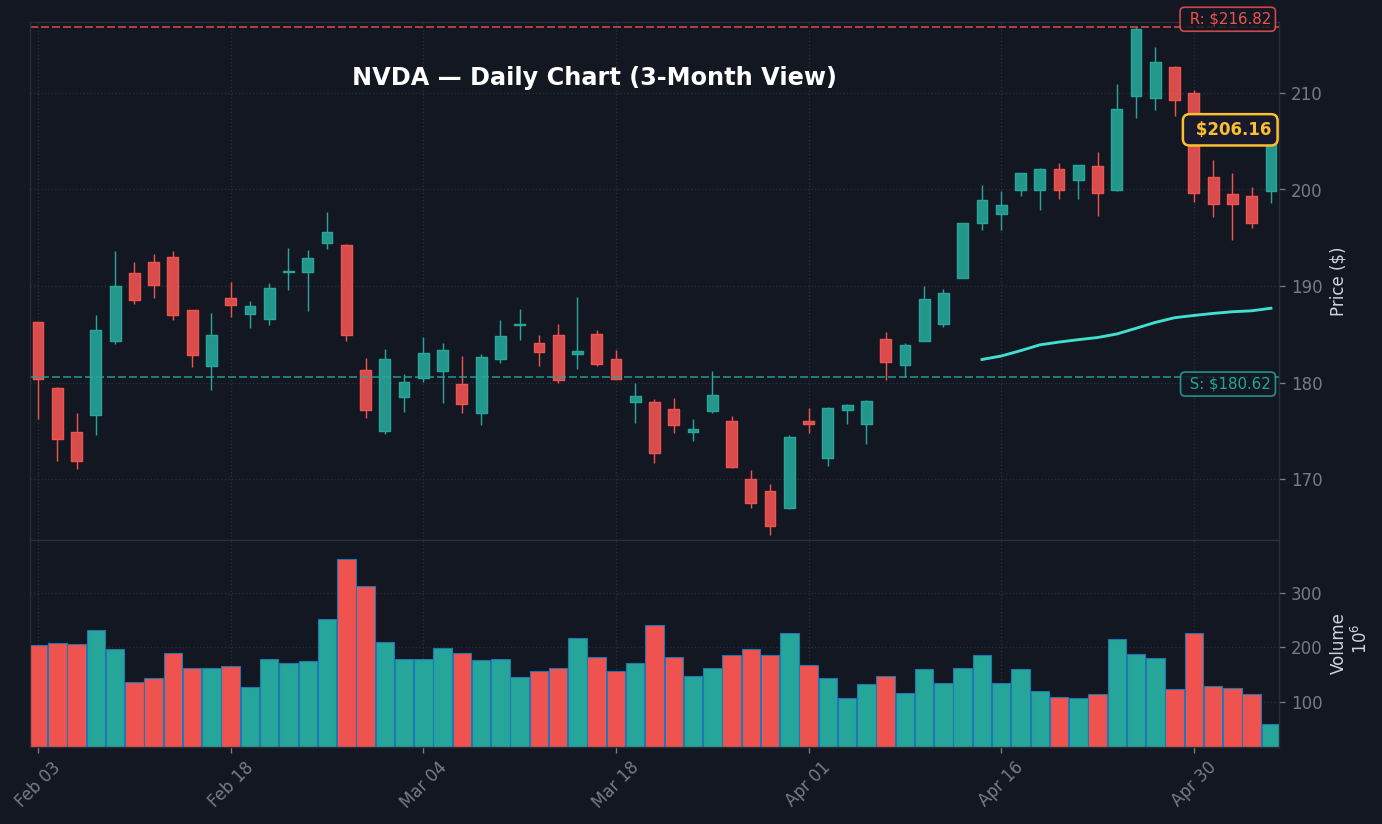
The 5.3% spike in NVDA has acted as a catalyst for the broader semiconductor index, which is tracking a 2.1% gain in tandem, per data from Yahoo Finance. This move is particularly significant given the current Fed Funds Rate of 3.64%, a level that usually exerts downward pressure on long-duration assets. Instead, the market is discounting interest rate sensitivity in favor of AI-earnings growth, a trend confirmed by the 10Y-2Y yield spread widening slightly to 0.50pp, which historically points to a “soft landing” optimism among credit investors, according to FRED data.
Notable here: the VIX is trading at 17.4, significantly below its 20-day average of 18.5, indicating that the move in NVDA is being perceived as a “risk-on” expansion rather than a speculative bubble bursting. This suggests that the current volatility environment is supportive of further upside if large-cap leaders continue to deliver, as institutional portfolios are currently under-allocated to the semiconductor sector relative to their long-term benchmarks, per FactSet estimates.
XRP vs. NVDA: Dissecting the Divergent Liquidity Flows
While NVDA thrives on tangible revenue growth, the debate surrounding XRP involves a different set of liquidity drivers. In sessions where high-growth tech surges, crypto assets often experience a “liquidity leakage” as capital is pulled from speculative tokens to fund high-conviction positions in momentum stocks like NVDA, per observed market volume trends. The disconnect is apparent: NVDA is seeing massive institutional buying, whereas XRP demand is dominated by retail momentum traders looking for a lower-cost entry point into the digital asset space.
Based on current market data, the correlation between NVDA and XRP has turned negative over the last 72 hours, signaling that capital is shifting from speculative retail crypto-exposure back into the “safe haven” of AI infrastructure. This is a crucial observation for active traders: when NVDA experiences these outsized moves, it effectively crowds out smaller, riskier assets by absorbing the available risk appetite in the broader retail universe. As a result, until the NVDA momentum settles, liquidity for speculative altcoins like XRP will likely remain subdued.
3 Scenarios From Here
- Bull: NVDA holds $205 support through Friday close → Test of $225 resistance by end of May.
- Base: NVDA consolidates between $198 and $208 → Retail rotation into XRP remains limited while NVDA stays above $200.
- Bear: NVDA fails to hold $195 support on profit-taking → Retracement to $182 levels and potential liquidity flight back into speculative crypto.
What to Watch Next
- Watch whether NVDA maintains its 5% gain through the 4:00 PM ET close to confirm institutional follow-through.
- Key level: $200.00 (psychological and technical pivot for NVDA).
- If NVDA breaks below $198.50 then expect a rapid rotation of liquidity into high-beta crypto assets like XRP as traders look for hedges.
- Trigger: May 10th CPI print, which will dictate the next move for the 10Y Treasury yield and, by extension, discount rates for tech growth.
Frequently Asked Questions
Why is the market moving right now?
The market is currently reacting to a 5.3% surge in NVDA, driven by robust enterprise AI demand. This move is sucking liquidity out of broader speculative segments, including cryptocurrencies like XRP, as investors prioritize established high-growth tech leaders.
What should investors watch next?
Investors should monitor the $200 technical level for NVDA; a hold above this suggests continued momentum, while a break could trigger a rotation. Additionally, the May 10th CPI release remains a critical macro catalyst that will influence the 10Y Treasury yield and tech valuation models.
Is XRP a better buy than NVDA right now?
Data indicates that institutional capital is currently favoring NVDA due to clear revenue fundamentals, whereas XRP demand is speculative and retail-driven. The negative correlation between the two suggests that capital is currently flowing into NVDA at the expense of speculative crypto assets.
Nothing in this article should be construed as a recommendation to buy or sell any security. Past performance does not guarantee future results.