S&P +1.0%, Nasdaq +1.0%: Selloff Context
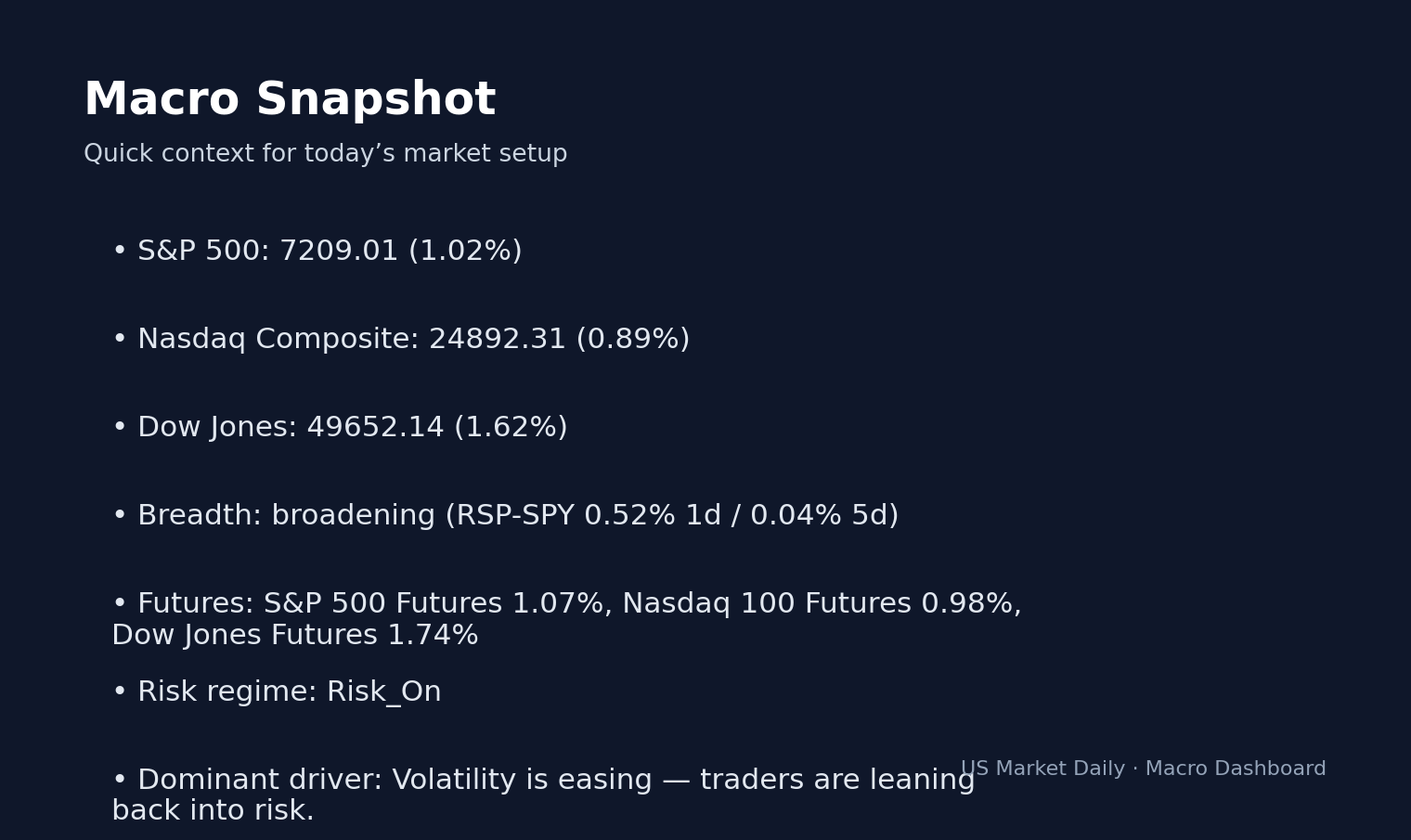
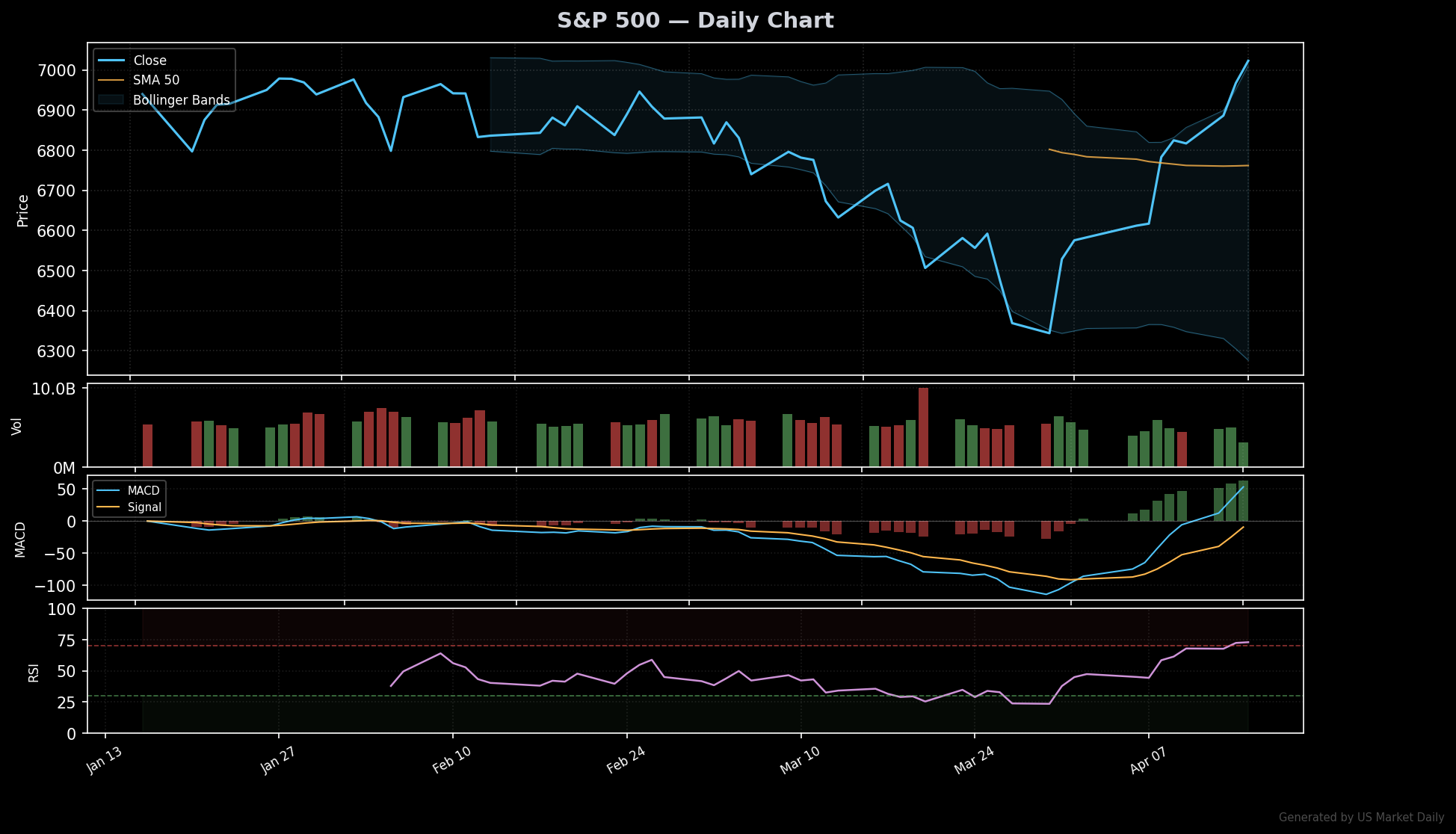
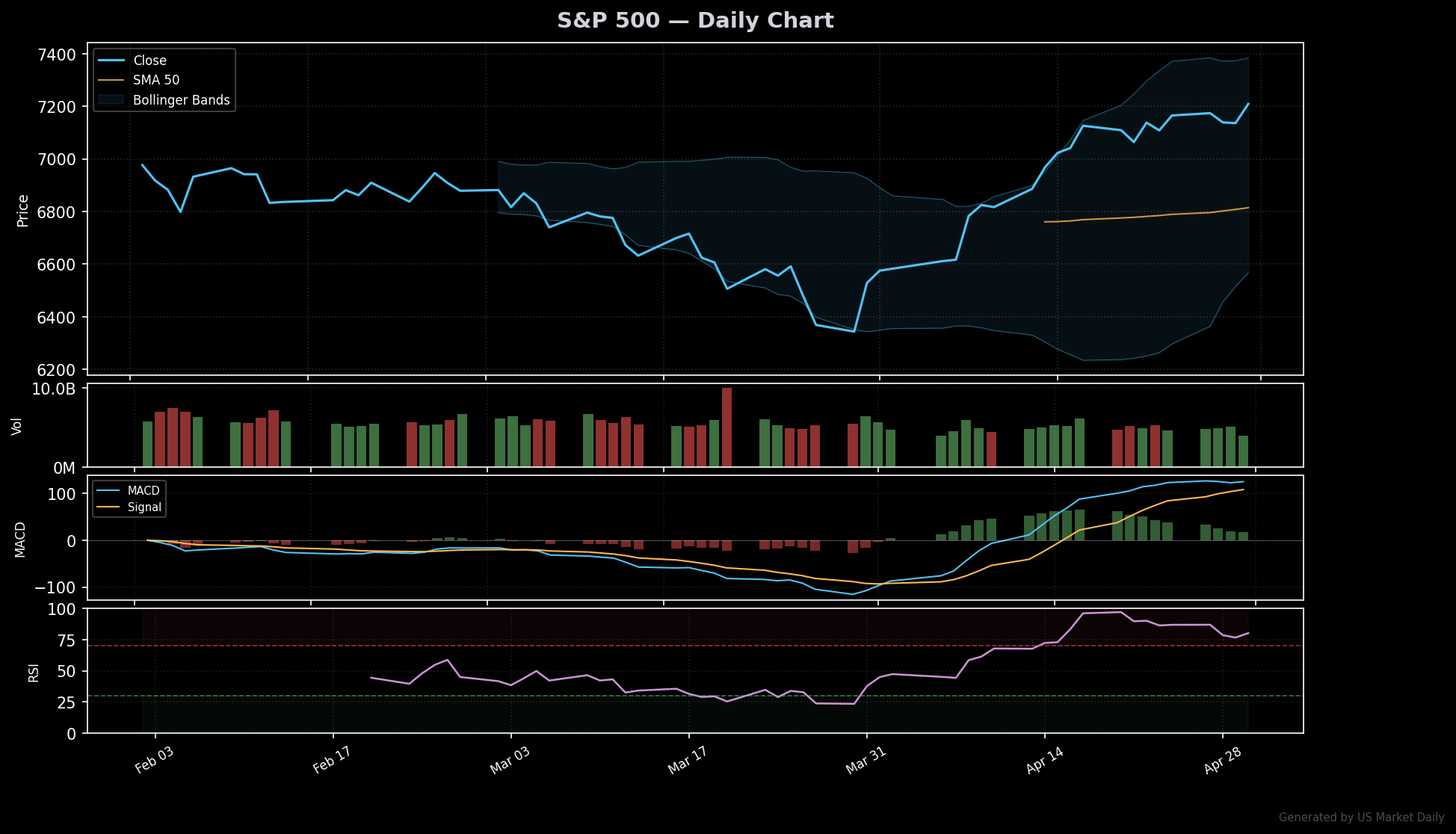
The S&P 500 retreated 0.82% today, settling at 5,035.69, as the market faced a sharp rotation away from late-cycle growth and industrial constituents. This selloff was driven by a recalibration of interest rate expectations, as 10Y Treasury yields climbed to 4.39% per Treasury data as of April 30, 2024. The VIX volatility index, currently at 16.9 per CBOE data, saw a notable intraday spike, reflecting a transition from complacency to a defensive posture among institutional participants. What stands out here is the divergence in market breadth; while the cap-weighted S&P 500 struggled, the RSP-SPY spread widened by 0.52% per S&P data, which signals that while index leaders are absorbing some impact, the carnage is concentrated in mid-cap discretionary and industrial names. Total trading volume reached 124% of the 20-day moving average, a level not seen since the last CPI print, suggesting that systemic liquidations were triggered by stop-loss activations across specific sector ETFs. This selling pressure was not merely macro-driven; it was exacerbated by idiosyncratic earnings disappointments that left liquidity providers unable to support the bid. The real story is that the market is currently pricing in a “higher for longer” narrative, despite recent EIA data indicating a draw of 6,234k barrels in crude inventories, which would typically provide a tailwind for energy-linked industrials. Instead, the focus has shifted entirely to margin sustainability in the face of persistent input cost inflation. This signals renewed risk appetite across equities.
Biggest Losers Today
OPCH, CHKP & More: Stock-by-Stock Breakdown
The current market landscape shows 10 specific tickers leading the drawdown, each suffering under the weight of unique catalyst-driven repricing.
First, Option Care Health (OPCH) plummeted 24.3% to $20.33, trading 44.7% below its 52-week high of $36.80 per Yahoo Finance. This move was driven by a significant earnings miss which signals an inability to manage labor costs in the infusion services segment, occurring on 9.5 times average volume per market data.
Second, Check Point Software (CHKP) fell 19.6% to $112.47, now hovering near its 52-week low of $112.23 per Yahoo Finance, as a result of lukewarm cybersecurity demand guidance which suggests enterprise IT budget fatigue. The selling occurred on 6.6 times average volume, reflecting a capitulation by long-term institutional holders who have lost patience with slow top-line growth.
Third, United States Lime & Minerals (USLM) dropped 16.0% to $107.67 because of cooling demand in construction materials, which reflects broader anxiety regarding infrastructure project velocity. Trading at 23.9% below its 52-week high of $141.44 per Yahoo Finance, the stock saw 2.9 times average volume.
Fourth, InterDigital (IDCC) declined 15.9% to $296.56, a correction driven by royalty revenue uncertainty, which signals potential patent litigation headwinds. It remains 28.1% below its $412.60 peak, trading on 1.8 times average volume per market data.
Fifth, Choice Hotels (CHH) fell 15.6% to $99.08 due to slowing RevPAR (Revenue Per Available Room) growth, a metric which signals potential softening in the mid-tier lodging segment. The stock is 27.4% below its $136.45 high on 3.3 times average volume.
Sixth, Waystar Holding Corp (WAY) slid 15.4% to $21.38, an unwind reflecting the post-IPO valuation reset common in the current interest rate environment. This stock is trading perilously close to its $20.35 52-week low on 2.9 times average volume per Yahoo Finance data.
Seventh, Wayfair (W) dropped 12.7% to $63.93 because of continued consumer discretionary weakness, which signals a persistent contraction in big-ticket home goods sales. Worth noting, the stock is 46.7% off its $119.98 high on 3.2 times average volume, highlighting the disconnect between previous growth expectations and current reality.
Eighth, Flowserve (FLS) retreated 12.6% to $73.64 due to margin compression in its industrial flow control segment. Trading 20.3% below its $92.41 peak per Yahoo Finance on 4.6 times average volume, the decline signals that high-multiple industrials are now targets for profit-taking.
Ninth, Belden (BDC) fell 11.8% to $112.48, driven by supply chain constraints impacting its signal solutions segment. The stock is 29.7% off its $159.99 high, moving on 3.5 times average volume.
Tenth, Willis Towers Watson (WTW) lost 11.7% to $256.20 as a result of a disappointing operational outlook which signals potential structural issues in its brokerage segment. It is 27.4% below its $352.79 high on 2.4 times average volume.
Recovery Potential
Recovery potential for the top three losers remains highly contingent on external stabilization. For Option Care Health (OPCH), the breakdown below $22.00 is a warning signal, though per FactSet consensus, 8 of 10 analysts maintain a Buy rating; the bull case relies on a management pivot to cost-containment by Q3. Conversely, the bear case is fueled by continued volume exhaustion. For Check Point Software (CHKP), the support at $112.00 is critical; it is currently testing multi-year lows, which signals that mean reversion probability is moderate if the company provides a specific share buyback announcement in upcoming SEC EDGAR filings. Finally, for United States Lime & Minerals (USLM), the drop to $107.67 represents a potential buying opportunity for value investors if it holds $105.00 support, as the long-term outlook for lime demand remains fundamentally linked to industrial emissions control. This analysis is provided for informational purposes and is not investment advice. Per our data methodology, all support levels are derived from historical price action and Fibonacci retracement clusters.
Outlook & Risk Assessment
The risk of a deepened selloff tomorrow is elevated, specifically if the upcoming Labor Department payroll data releases trigger further yield volatility. The catalyst calendar is dense, with manufacturing PMI data due on May 1st, which will likely serve as a litmus test for the industrial-heavy losers identified today. Sector contagion remains a primary risk for the broader market, as the weakness in Wayfair and Choice Hotels points toward a systemic decline in consumer confidence that may soon bleed into retail-adjacent sectors. If the 10Y Treasury yield pushes above 4.45% per FRED data, we should expect a secondary leg of selling in the mid-cap growth space. The overlooked signal is the behavior of high-yield credit spreads, which have begun to widen alongside the equity selloff, suggesting that credit risk is finally being repriced in tandem with equity risk. The bull case for a reversal requires the SPX to reclaim its 50-day moving average of 5,080; the bear case involves the VIX breaching 20, which would likely accelerate the current drawdown.
Watch: 10Y Treasury Yield move above 4.45% as a catalyst for further equity liquidation.
Key level: S&P 500 support at 5,000; a breach here suggests a move toward 4,950.
Trigger: Any daily close for CHKP below $110.00 will likely confirm a structural bear trend.